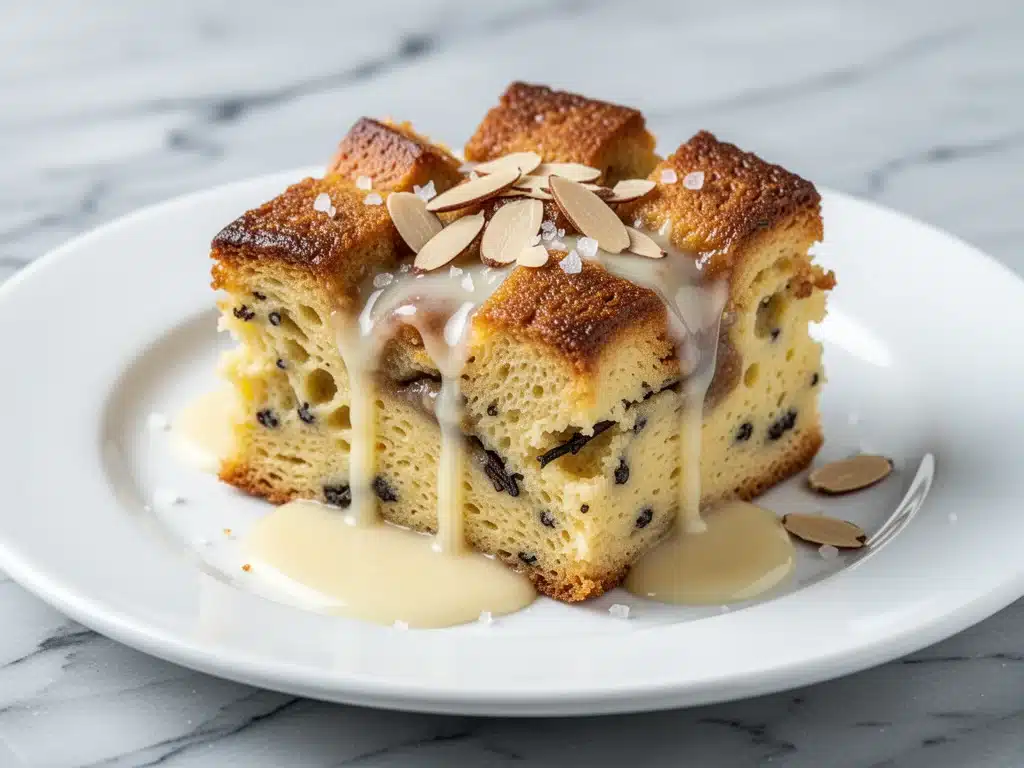
There is a very specific smell that lives in my memory of Sunday afternoons. It’s a mix of toasted cinnamon, warm vanilla, and that slightly burnt-sugar scent that only happens when someone lets the oven get just a little too hot for a few minutes. For me, that smell is the olfactory equivalent of a hug. It’s the scent of my grandmother’s kitchen, and it’s the scent of her bread pudding.
I used to think bread pudding was just a way to use up stale bread. A practical, frugal little dish for people who couldn’t afford to throw anything away. But as I got older and started making it myself—often with varying degrees of success—I realized it’s actually one of the most comforting desserts you can make. It’s rustic, it’s forgiving, and it’s deeply nostalgic. This old-fashioned bread pudding with vanilla sauce isn’t just a recipe; it’s a ritual. It’s the dessert that shows up at potlucks, holidays, and lazy Sunday brunches because it tastes like home.
I’ve made this bread pudding at least a dozen times in the last year. Sometimes I stick strictly to my grandma’s original method. Other times, I tweak it—adding a pinch of nutmeg, using brioche instead of white bread, or adjusting the sweetness of the vanilla sauce. But the core remains the same: soft, custardy bread, a rich egg mixture, and that luscious, warm vanilla sauce poured over the top. It’s the kind of dessert that makes people close their eyes after the first bite. And honestly? It’s the easiest thing in the world to make, which means you can pull it off even when you’re tired, stressed, or just don’t want to spend hours in the kitchen.
Why You’ll Love This Recipe
I know, I know. “Another bread pudding?” But hear me out. This isn’t the dry, crumbly version you might get at a diner where they’ve been holding it under a heat lamp since breakfast. This is the good stuff. The kind that’s still warm in the middle, with a slight crunch on top and a custard interior that’s silky enough to spoon directly from the dish.
Here’s why this old-fashioned bread pudding with vanilla sauce has become a permanent fixture in my rotation:
It Uses Up Leftovers (And Saves You Money) — Seriously, if you have a loaf of bread that’s gone slightly stale, this is its moment to shine. Fresh bread doesn’t absorb the custard as well, so stale bread is actually better here. It’s the ultimate “don’t throw it away” recipe. I’ve made this with day-old white bread, day-old brioche, and even leftover challah. It all works.
The Vanilla Sauce Is Worth the Extra 5 Minutes — Some people skip the sauce and just eat the pudding plain. Don’t do that. The sauce transforms the dish from a simple custard into something truly special. It’s sweet, tangy, and warm. It’s the kind of sauce that makes you want to lick the spoon. Trust me, it’s worth the effort.
It’s a Crowd-Pleaser — I’ve served this to picky eaters, food critics, and my own family, and everyone loves it. It’s not overly sweet, it’s not complicated, and it feels fancy enough for a dinner party but humble enough for a Tuesday night treat. It’s a dessert that brings people together.
It’s Hands-Off Cooking — Once you assemble the dish and put it in the oven, you’re pretty much done. You can clean the kitchen, help the kids with homework, or just sit down and relax. The oven does all the work. This is perfect for when you want to bake something but don’t have the energy to stand over the stove.
It Tastes Better the Next Day — Okay, maybe not *better*, but it’s definitely easier to slice and serve when it’s cooled down. The flavors meld together overnight, making the next day’s portion even more cohesive. I often make this the night before a gathering, and it’s ready to go when guests arrive.
This recipe has saved me more times than I can count. It’s my go-to when I need a dessert that feels homemade and heartfelt, without any of the stress. It’s reliable, delicious, and always a hit.
Ingredients You’ll Need
One of the best things about this old-fashioned bread pudding with vanilla sauce is how simple the ingredients are. You probably have most of this already in your pantry and fridge. Here’s what you need, and a few tips on how to choose the best versions.
For the Bread Pudding:
Stale Bread (6-8 cups / about 300-400g) — This is the star of the show. You want bread that’s dry enough to absorb the custard but not so hard that it won’t soften. Day-old white sandwich bread works perfectly. Brioche or challah are luxurious alternatives that make the pudding richer. Avoid whole wheat or dense breads unless you like a heavier texture. Tear the bread into bite-sized pieces—don’t use a knife. Tearing creates rough edges that absorb more custard.
Butter (3 tablespoons / 45g) — Melted butter adds richness and helps the top get slightly crispy. I use unsalted butter so I can control the salt. If you’re out, you can skip it, but it really does make a difference.
Whole Milk (2 cups / 480ml) — Whole milk gives the best creamy texture. You can use 2% if you’re watching calories, but the pudding will be slightly less rich. Do not use skim milk; it won’t give you that custardy mouthfeel.
Heavy Cream (1 cup / 240ml) — This is what makes the pudding luxuriously tender. Don’t substitute with half-and-half unless you’re okay with a firmer texture. The fat content is key here.
Eggs (4 large) — Large eggs are standard, but make sure they’re fresh. The eggs bind the custard together. If you’re making this ahead, let the eggs come to room temperature for easier mixing.
Granulated Sugar (¾ cup / 150g) — This provides the sweetness. If you prefer a less sweet pudding, reduce to ½ cup. But I recommend sticking with ¾ cup because the vanilla sauce adds plenty of sweetness.
Vanilla Extract (2 teaspoons) — Use pure vanilla extract, not imitation. The flavor makes a huge difference in the custard. If you have vanilla bean paste, even better. It adds little specks of vanilla that look beautiful.
Cinnamon (1 teaspoon) — Ground cinnamon is classic. Don’t skip it. It adds warmth and depth. If you like spice, you can add a pinch of nutmeg or allspice, but keep it subtle.
Salt (½ teaspoon) — Yes, salt in a dessert. It balances the sweetness and enhances the vanilla flavor. Don’t omit it.
For the Vanilla Sauce:
Butter (½ cup / 115g) — Unsalted butter, melted. This gives the sauce its richness.
Granulated Sugar (1 cup / 200g) — This sweetens the sauce. Adjust to taste if you prefer it less sweet.
Heavy Cream (1 cup / 240ml) — Full-fat cream is essential for a smooth, pourable sauce. Low-fat cream will make the sauce thin and separate.
Vanilla Extract (2 teaspoons) — Again, use pure vanilla. It’s the flavor backbone of the sauce.
Optional: A Pinch of Salt — Just a tiny pinch to balance the sweetness. It makes the vanilla flavor pop.
Equipment Needed
You don’t need any fancy gadgets for this. Here’s what I actually use, along with some honest opinions on alternatives.
9×13-Inch Baking Dish — This is the standard size for this recipe. A glass dish works well because it heats evenly. A ceramic dish is nice too, but it might take a few extra minutes to bake. I’ve used metal pans, but they can brown the top too quickly, so keep an eye on it.
Large Mixing Bowl — You need something big enough to whisk the eggs, milk, cream, sugar, and vanilla together. I use a 4-quart bowl. If it’s too small, you’ll spill everything. Happened to me once. Don’t make my mistake.
Whisk — A standard balloon whisk is perfect for blending the custard. Make sure you whisk until the sugar is mostly dissolved. It shouldn’t take long.
Measuring Cups and Spoons — Standard stuff. I use a set from the dollar store, and they work fine. Just make sure they’re accurate.
Spatula — For scraping the bowl and spreading the butter over the bread. A silicone spatula is best because it bends and gets into the corners.
Small Saucepan — For making the vanilla sauce. A small, heavy-bottomed pan works best so the sauce doesn’t burn. I use a 2-quart saucepan.
Wooden Spoon — For stirring the sauce. It distributes heat evenly and doesn’t scratch the pan.
Colander (Optional) — If your bread is very stale and hard, you can soak it in a little water for a minute to soften it before tearing. I usually skip this, but it can help if the bread is rock hard.
How to Make It: Step-by-Step
Alright, let’s make this! I’m walking you through exactly how I do it, including the little tricks I’ve picked up over the years. It’s simple, but there are a few key steps that make all the difference.
Step 1: Prep the Bread (5 minutes)
Start by tearing your stale bread into bite-sized pieces. Don’t use a knife—tearing creates rough edges that absorb more custard. Aim for about 6-8 cups of bread pieces. If you’re using brioche or challah, you might need less because they’re denser. Toss the bread pieces into your 9×13-inch baking dish. If you want a richer flavor, drizzle the melted butter over the bread and toss it to coat. This helps the top get slightly crispy.
Step 2: Make the Custard (5 minutes)
In your large mixing bowl, whisk together the eggs until they’re lightly beaten. Add the whole milk, heavy cream, granulated sugar, vanilla extract, cinnamon, and salt. Whisk vigorously until the sugar is mostly dissolved and the mixture is smooth. You don’t need to overmix, but make sure there are no lumps of sugar. Pour this custard mixture evenly over the bread in the baking dish. Use a spatula to press the bread down into the custard, making sure every piece is soaked. If some pieces are sticking out, press them down. Let it sit for 10-15 minutes so the bread absorbs the liquid. This step is crucial—it ensures the pudding is soft and custardy, not dry.
Step 3: Bake the Pudding (45-50 minutes)
Preheat your oven to 350°F (175°C). Place the baking dish in the center of the oven and bake for 45-50 minutes. The pudding is done when the top is golden brown and slightly puffed, and the center is just set. It shouldn’t be jiggly, but it shouldn’t be firm either. It should have a slight wobble, like a custard. If the top is browning too quickly, cover it loosely with aluminum foil for the last 15 minutes of baking. I’ve done this a few times when my oven runs hot. Trust your eyes, not just the clock.
Step 4: Make the Vanilla Sauce (10 minutes)
While the pudding bakes, make the vanilla sauce. In a small saucepan over medium heat, melt the butter. Once melted, whisk in the sugar, heavy cream, and vanilla extract. Stir constantly until the sugar is dissolved and the sauce is smooth. It should thicken slightly as it heats, but it will continue to thicken as it cools. Remove from heat and set aside. The sauce should be pourable but not thin. If it’s too thick, add a splash more cream. If it’s too thin, let it simmer for another minute.
Step 5: Serve
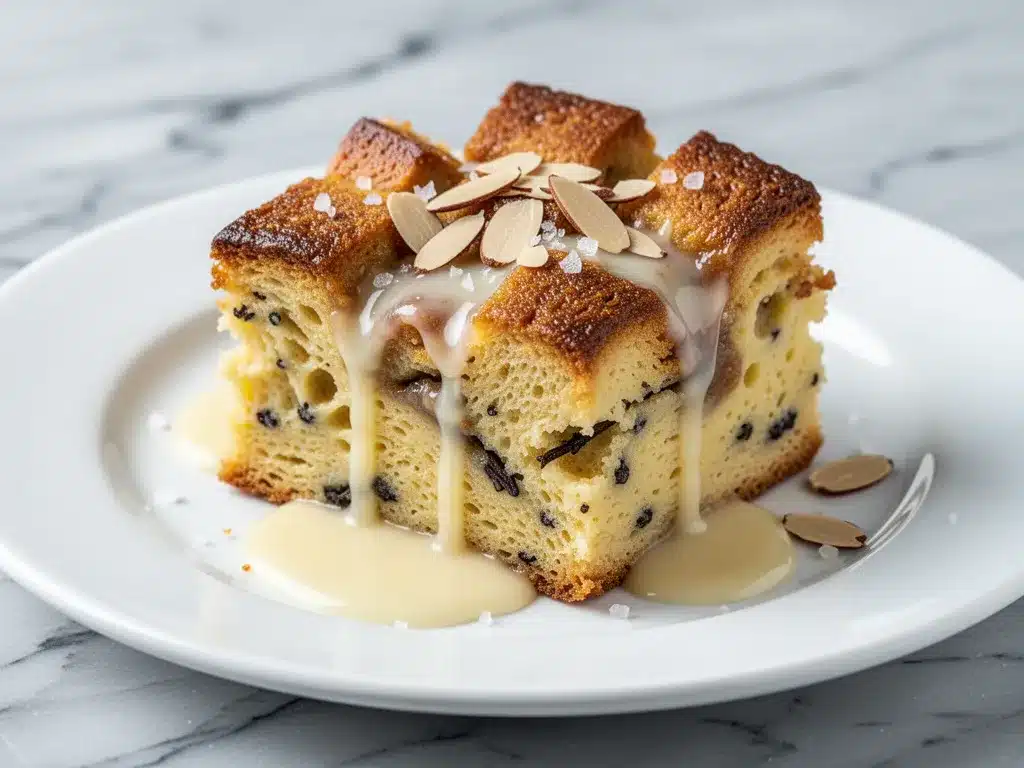
Let the bread pudding cool for 10-15 minutes before serving. This allows the custard to set slightly so it’s easier to slice. Spoon a portion onto a plate and drizzle generously with the warm vanilla sauce. Serve immediately. The contrast between the warm, soft pudding and the rich, sweet sauce is pure magic.
Total Time: About 1 hour 15 minutes (15 minutes prep, 50 minutes bake, 10 minutes sauce)
Expert Tips & Tricks
Here’s everything I’ve learned from making this dozens of times. These tips will save you from my mistakes.
Use Day-Old Bread — Fresh bread is too soft and won’t absorb the custard properly. Day-old bread is perfect. If you don’t have stale bread, you can toast fresh bread in the oven at 300°F for 10 minutes to dry it out. It works well.
Don’t Skimp on the Custard — Make sure every piece of bread is soaked. If some pieces are dry, the pudding will have uneven texture. Press the bread down into the custard and let it sit for at least 10 minutes. This step is non-negotiable.
Watch the Oven — Ovens vary. My oven runs hot, so I’ve learned to check the pudding at 40 minutes. If the top is too brown, cover it with foil. If it’s not brown enough, leave it in for another 5-10 minutes. Look for that golden, slightly puffed top.
Make the Sauce Ahead — The vanilla sauce can be made up to 2 days ahead and stored in the fridge. Reheat it gently on the stove or in the microwave before serving. It tastes just as good.
Leftovers Store Well — Store leftovers in an airtight container in the fridge for up to 3 days. Reheat individual portions in the microwave for 30-60 seconds. The sauce can be stored separately and reheated.
Freezing Note — Bread pudding freezes well, but the sauce does not. Freeze the baked pudding (without sauce) for up to 3 months. Thaw in the fridge and reheat before serving. Make fresh sauce when ready to eat.
Variations & Substitutions
Once you’ve nailed the basic version, here’s how you can mix it up. I’ve tried all of these, and they all work.
Brioche Bread Pudding — Use brioche instead of white bread. It’s richer and slightly sweeter. Reduce the sugar in the custard by 2 tablespoons. This is my personal favorite version.
Chai Spice Bread Pudding — Swap the cinnamon for 1 teaspoon of chai spice blend. Add a pinch of cardamom and ginger. It’s warm and aromatic, perfect for fall.
Rum Raisin Bread Pudding — Add ½ cup of raisins to the bread. Soak the raisins in 2 tablespoons of rum for 30 minutes before adding. This is a classic variation that’s absolutely delicious.
Chocolate Chip Bread Pudding — Toss 1 cup of chocolate chips into the bread before adding the custard. The chips melt into pockets of chocolate goodness. My kids love this version.
Gluten-Free — Use gluten-free bread. Make sure it’s stale, as fresh gluten-free bread can be gummy. The rest of the ingredients are naturally gluten-free.
Dairy-Free — Use dairy-free milk and cream alternatives. Nut milk works well, but it might be thinner. Add a tablespoon of cornstarch to the custard to thicken it. Use dairy-free butter for the sauce.
Lower-Sugar — Reduce the sugar in the custard to ½ cup and in the sauce to ½ cup. Use a sugar substitute if preferred. It’s still sweet, just less so.
Serving & Storage
How to Serve: I usually serve this straight from the baking dish at the dinner table—it looks rustic and stays warm. But here are other ways I’ve enjoyed it:
Side Dishes: This is a dessert, so it doesn’t need sides. But if you’re having a brunch, it pairs well with grilled watermelon feta skewers for a light appetizer. For a full holiday meal, it’s a perfect finish to dishes like labor day maple bourbon ribs or labor day smores dip.
Toppings Bar: When I have guests, I put out: extra vanilla sauce, whipped cream, fresh berries, and toasted pecans. Everyone customizes their bowl.
Storage Instructions:
Refrigerator: Store in an airtight container for up to 3 days. The pudding will firm up in the fridge—totally normal.
Reheating: Best method: Microwave individual portions for 30-60 seconds. Add a splash of milk if it’s too dry. Oven method: Reheat at 350°F for 15-20 minutes, covered with foil. It won’t be as crispy on top, but it’s still good.
Freezing: Freeze the baked pudding (without sauce) for up to 3 months. Wrap tightly in plastic wrap and then foil. Thaw in the fridge overnight and reheat. Do not freeze the sauce.
Nutrition Information
I’m not a nutritionist, but here’s the breakdown if you’re tracking. This is per serving (based on 8 servings), including the vanilla sauce.
| Nutrient | Amount |
|---|---|
| Calories | 480 |
| Protein | 8g |
| Carbs | 52g |
| Fiber | 1g |
| Sugar | 38g |
| Fat | 26g |
| Saturated Fat | 15g |
| Cholesterol | 120mg |
| Sodium | 280mg |
What’s Good: It’s a satisfying dessert that provides some protein from the eggs and dairy. It’s comforting and filling.
What to Know: It’s higher in calories and sugar from the cream, butter, and sauce. It’s indulgent, so enjoy in moderation. It contains dairy and gluten.
Final Thoughts
So that’s my go-to old-fashioned bread pudding with vanilla sauce! I’ve probably talked your ear off at this point, but when you make a recipe this often, you have a lot to say about it.
This has saved dessert nights more times than I can count. It’s my answer to “what’s for dessert?” when I’m tired, don’t want takeout, and still want something that tastes really good. My family is happy, my friends are happy, and I’m happy because I’m not stressed about cooking.
Make it yours! Try different breads, swap in your favorite spices, adjust the sweetness. The best recipes are the ones you adapt to your family’s tastes. If you make this, drop a comment and let me know what you think! I love hearing how recipes turn out in your kitchen. And if something doesn’t work, tell me that too—I’m here to help troubleshoot.
Happy baking! And I hope your kitchen smells half as good as mine does right now.
Frequently Asked Questions
Can I use fresh bread instead of stale bread?
You can, but the texture won’t be as good. Fresh bread is too soft and won’t absorb the custard properly, leading to a soggy or uneven pudding. If you must use fresh bread, toast it in the oven at 300°F for 10 minutes to dry it out. Day-old bread is ideal.
Why did my bread pudding turn out watery?
This usually means the bread didn’t absorb enough custard. Make sure you press the bread down into the liquid and let it sit for at least 10 minutes before baking. Also, check that you’re using the right amount of liquid. If the custard is too thin, add an extra egg to bind it.
Can I make this ahead for a dinner party?
Absolutely. Assemble the pudding and refrigerate it overnight (covered). Bake it the next day, adding 5-10 minutes to the baking time if it’s cold from the fridge. The vanilla sauce can be made 2 days ahead and reheated gently before serving.
Why did my vanilla sauce separate?
This happens if the heat was too high or if you didn’t whisk enough. Always heat the sauce over medium-low heat and whisk constantly. If it separates, remove it from the heat and whisk in a splash of cold cream to bring it back together.
Can I freeze bread pudding?
Yes, but only the baked pudding, not the sauce. Wrap the cooled pudding tightly in plastic wrap and then foil. Freeze for up to 3 months. Thaw in the fridge overnight and reheat in the oven or microwave. Make fresh sauce when ready to eat.
Can I use almond milk instead of dairy milk?
You can, but the pudding will be less rich and creamy. Nut milk works, but it’s thinner. You might need to add an extra egg or a tablespoon of cornstarch to thicken the custard. The flavor will be slightly different, but still good.
How do I reheat leftovers without drying it out?
Add a splash of milk or cream to the pudding before reheating. Microwave in 30-second intervals, stirring between. Or reheat in the oven at 350°F for 15 minutes, covered with foil, to keep it moist. The sauce can be reheated gently on the stove.
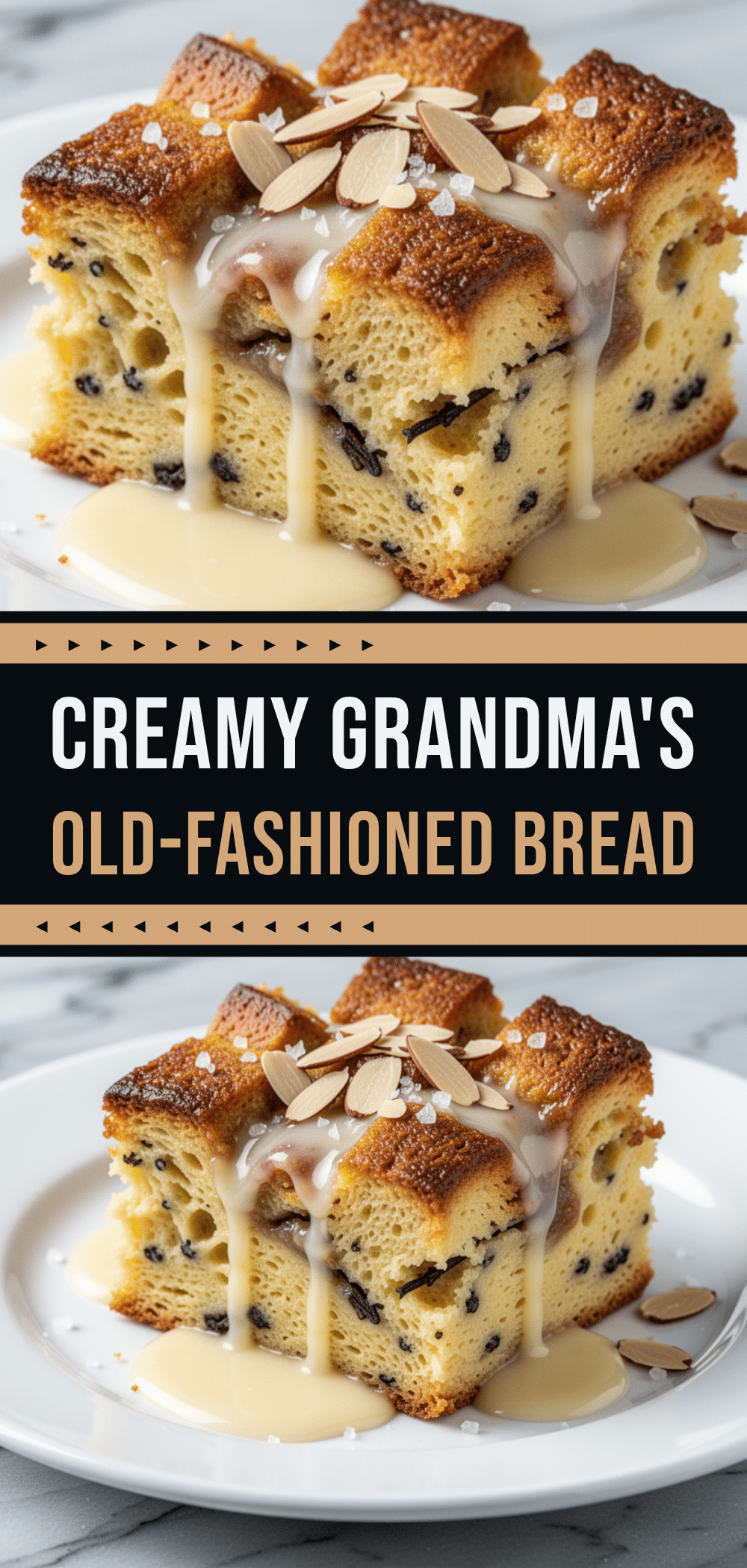
Pin This Recipe!
Grandmas Bread Pudding: Best Old-Fashioned Dessert
- Total Time: 1 hour 15 minutes
- Yield: 8 servings 1x
Description
A nostalgic, rustic bread pudding made with stale bread, rich custard, and a luscious warm vanilla sauce. This comforting dessert is easy to make, uses up leftovers, and tastes like home.
Ingredients
- 6–8 cups stale bread (torn into bite-sized pieces)
- 3 tablespoons unsalted butter (melted)
- 2 cups whole milk
- 1 cup heavy cream
- 4 large eggs
- ¾ cup granulated sugar
- 2 teaspoons pure vanilla extract
- 1 teaspoon ground cinnamon
- ½ teaspoon salt
- ½ cup unsalted butter (for sauce)
- 1 cup granulated sugar (for sauce)
- 1 cup heavy cream (for sauce)
- 2 teaspoons pure vanilla extract (for sauce)
- Pinch of salt (optional, for sauce)
Instructions
- Preheat oven to 350°F (175°C).
- Tear stale bread into bite-sized pieces and place them in a 9×13-inch baking dish. Drizzle with 3 tablespoons melted butter and toss to coat.
- In a large mixing bowl, whisk eggs until lightly beaten. Add milk, heavy cream, ¾ cup sugar, 2 teaspoons vanilla extract, cinnamon, and salt. Whisk vigorously until sugar is dissolved.
- Pour the custard mixture evenly over the bread. Press the bread down into the liquid to ensure all pieces are soaked. Let sit for 10-15 minutes.
- Bake for 45-50 minutes until the top is golden brown and the center is just set with a slight wobble. Cover with foil if browning too quickly.
- While baking, make the vanilla sauce: In a small saucepan over medium heat, melt ½ cup butter. Whisk in 1 cup sugar, 1 cup heavy cream, and 2 teaspoons vanilla extract. Stir constantly until smooth and slightly thickened.
- Let the bread pudding cool for 10-15 minutes before serving.
- Serve warm with the vanilla sauce drizzled on top.
Notes
Use day-old or stale bread for best results as it absorbs custard better than fresh bread. If using fresh bread, toast it at 300°F for 10 minutes to dry it out. The pudding can be assembled and refrigerated overnight before baking. The vanilla sauce can be made up to 2 days ahead. Leftovers store in the fridge for up to 3 days. Do not freeze the sauce.
- Prep Time: 15 minutes
- Cook Time: 50 minutes
- Category: Dessert
- Cuisine: American
Nutrition
- Serving Size: 1 slice with sauce
- Calories: 480
- Sugar: 38
- Sodium: 280
- Fat: 26
- Saturated Fat: 15
- Carbohydrates: 52
- Fiber: 1
- Protein: 8
Keywords: bread pudding, vanilla sauce, old-fashioned dessert, comfort food, easy baking, custard, holiday dessert, leftover bread recipe


