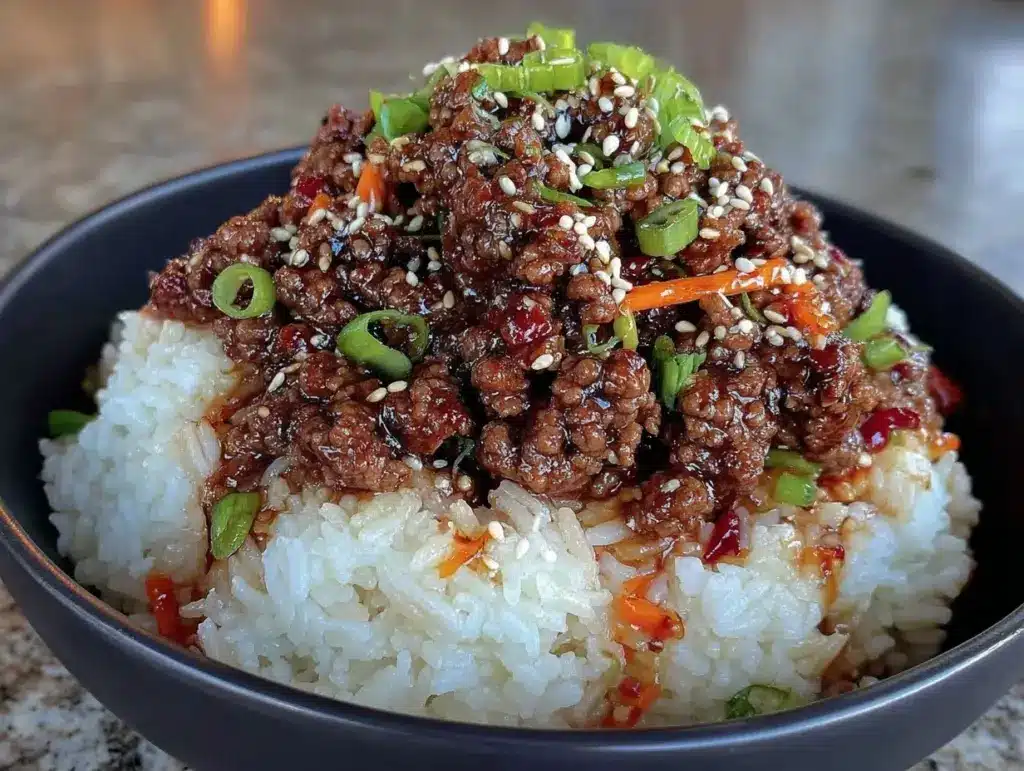
It was one of those Tuesdays that felt like it lasted three weeks. I had spent the morning answering emails that didn’t need answering, survived a commute that tested every ounce of my patience, and walked through my front door feeling like my bones were made of lead. I didn’t want to cook. I definitely didn’t want to order takeout and stare at a screen while it sat getting cold. I just needed something warm, something sweet and savory, and something that would make my shoulders drop three inches.
I opened the fridge. Half a pound of ground beef. Some soy sauce. A jar of gochujang I’d bought on a whim months ago. A bottle of honey. That’s it. I threw together what I thought would be a mediocre dinner. Thirty minutes later, I was sitting at my kitchen table, steam rising from a bowl of rice, eating something that tasted like a hug. This Easy Sticky Korean Ground Beef Bowls for Comfort recipe became my lifeline that night. It wasn’t about being fancy. It was about being fed.
I’ve made this dish more times than I can count since then. It’s my go-to when the world feels too loud and my energy feels too low. It’s gentle on the stove but bold on the palate. The sauce clings to every bit of beef, the rice soaks it all up, and for those twenty minutes, nothing else matters. If you’re reading this and you’re tired, if you need a moment of quiet nourishment, this is the one to make when you need to take care of yourself.
Why You’ll Love This Gentle Comfort Bowl
There’s a specific kind of magic in this dish. It’s not just about the flavor, though that’s a big part of it. It’s about how it makes you feel while you’re making it and after you eat it. Here’s why this Easy Sticky Korean Ground Beef Bowls for Comfort has earned a permanent spot in my weekly rotation.
- It Requires Zero Stress — You don’t need to chop a mountain of vegetables. You don’t need to marinate meat for hours. You just throw it in a pan. I make this on nights when I can barely keep my eyes open. It asks very little of you.
- The Sauce is Addictive — The balance of salty, sweet, and spicy is perfectly calibrated. It’s not overwhelming. It’s that subtle kick that makes you want to scrape the bowl clean. I’ve tried making it with less gochujang once, and it just wasn’t the same. Trust the paste.
- It’s Truly a One-Pan Meal — Well, technically you boil rice separately, but the beef cooks in a single skillet. Cleanup is minimal. I love that. After a long day, I don’t want to scrub three pots. I want to rinse one skillet and collapse onto the couch.
- It Feels Special Without the Effort — You know how restaurant Korean beef tastes expensive? This tastes like that, but it’s made in your own kitchen with ingredients you already have. It feels like a treat, but it’s actually just simple, honest food.
- It’s Customizable to Your Mood — Want it milder? Skip the extra chili. Want more crunch? Add sesame seeds. It bends to your needs. If you’re craving the rich, savory notes of other beef dishes, you might also enjoy my easy honey BBQ meatballs for a different kind of comfort.
This is my go-to when dinner needs to just work. It’s nourishing. It’s warm. It’s mine.
Key Ingredients for Your Comfort Bowl
Let’s talk about what goes into this bowl. I’ve kept the list short because when you’re tired, you don’t want a twenty-item shopping list. Each ingredient has a job. Here’s what you need to get that perfect sticky, savory flavor.
Ground Beef (1 lb / 450g)
Lean ground beef (90/10 or 93/7) works best here. You want enough fat to keep it juicy, but not so much that the bowl becomes greasy. I usually buy the standard package from my local grocery store. It’s consistent, affordable, and easy to work with. If you prefer turkey, that works too, but beef has that rich umami depth that makes this dish feel so comforting.
Gochujang (2 tbsp / 30g)
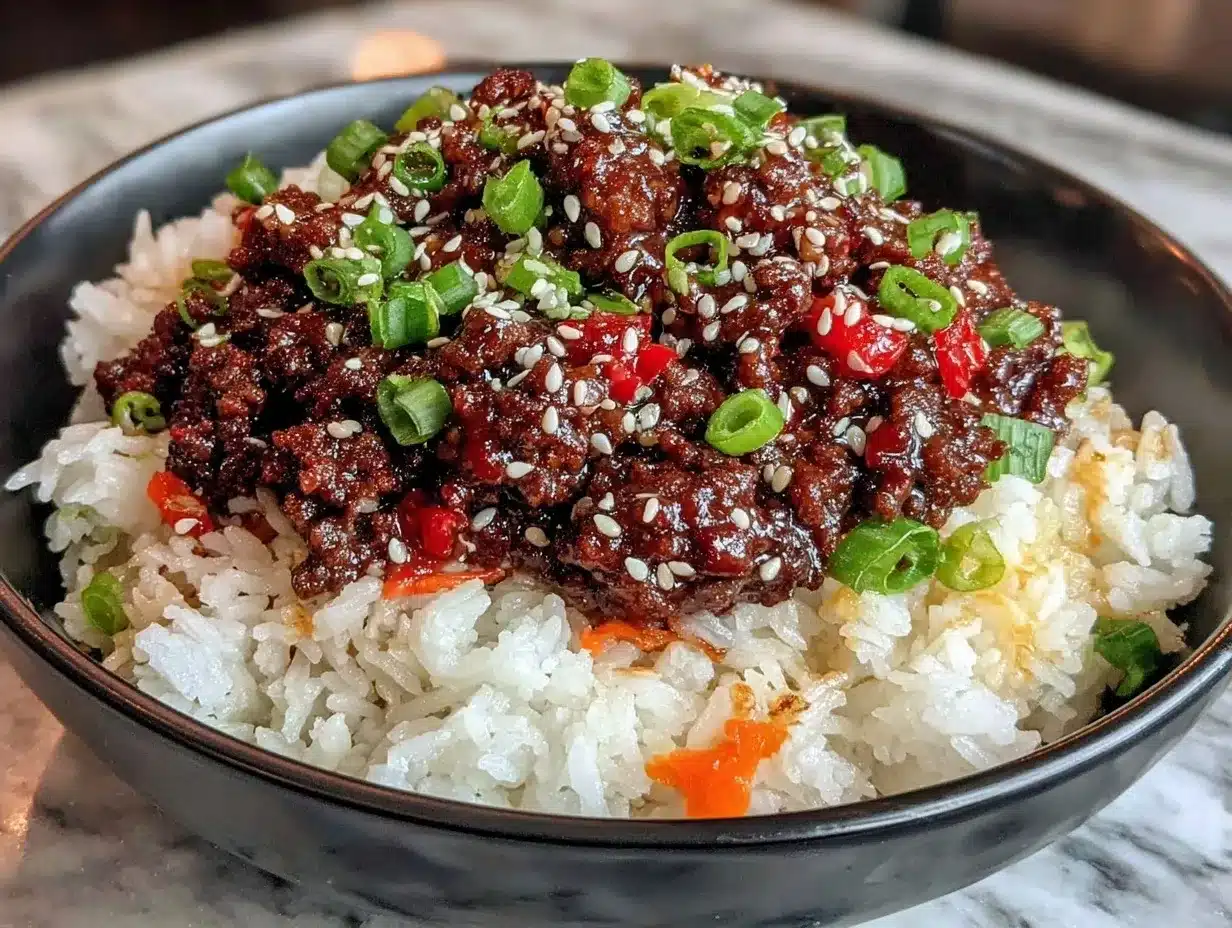
This is the Korean chili paste that gives the dish its signature warmth. It’s fermented, so it has a complex flavor—not just heat, but a deep, savory richness. Don’t skip this for regular chili powder. The texture and flavor profile are completely different. If you can’t find gochujang, sriracha is a decent substitute, but you’ll miss that fermented depth. Store it in the fridge once opened.
Soy Sauce (3 tbsp / 45ml)
I prefer low-sodium soy sauce because it allows you to control the saltiness. The gochujang is already salty, so you don’t want to overdo it. Regular soy sauce works, just taste before adding extra salt. Kikoman is my go-to brand because it’s reliable and widely available.
Honey (2 tbsp / 30ml)
Honey is what makes it “sticky.” It balances the heat from the gochujang and the salt from the soy sauce. Maple syrup works in a pinch, but honey has that distinct floral sweetness that pairs beautifully with the beef. Use real honey if you can. The fake stuff just tastes like sugar water.
Garlic (3 cloves / 1 tbsp minced)
Yes, three cloves. Fresh garlic is non-negotiable here. Jarred garlic has a metallic aftertaste that clashes with the delicate sweetness of the honey. I mince it finely so it cooks quickly and distributes evenly. If you’re having a really lazy night, you can use 1 teaspoon of garlic powder, but the fresh stuff is worth the effort.
Ginger (1 tsp / 2g grated)
Fresh ginger adds a bright, zesty note that cuts through the richness of the beef. It wakes up the whole dish. Grate it on the fine side of your box grater. If you don’t have fresh ginger, ½ teaspoon of ground ginger works, but the fresh flavor is so much more vibrant.
Neutral Oil (1 tbsp / 15ml)
Avocado oil or vegetable oil works well. You just need enough to coat the pan and help brown the beef. Don’t use olive oil—it has a strong flavor that might compete with the Korean spices. Keep it neutral.
Sesame Oil (1 tsp / 5ml)
This is added at the very end. It’s not for cooking; it’s for aroma. A little goes a long way. Toasted sesame oil has a nutty, intense flavor that defines Korean cuisine. If you don’t have it, you can skip it, but I promise you’ll notice the difference. It’s the finishing touch that makes it feel special.
Short-Grain White Rice (2 cups / 400g uncooked)
I use short-grain rice because it’s sticky and chewy, perfect for soaking up that sauce. Jasmine rice is too fluffy and won’t hold the sauce the same way. If you’re watching carbs, cauliflower rice works, but it changes the texture completely. For true comfort, stick with the real thing.
Tools You’ll Need
You don’t need fancy equipment. Here’s what I use. My kitchen is full of gadgets I barely touch, but for this, I only need a few basics.
- Large Skillet — I use a 12-inch non-stick skillet. It gives the beef room to brown instead of steaming. If your pan is too small, the beef will boil in its own juices, and you won’t get that nice caramelization.
- Rice Cooker or Medium Pot — I love my rice cooker because I can set it and forget it. But a simple pot with a tight-fitting lid works perfectly. Just remember the 1:1.5 rice-to-water ratio.
- Wooden Spoon or Silicone Spatula — Something sturdy to break up the beef as it cooks. I prefer wood because it doesn’t scratch my non-stick pan.
- Microplane or Box Grater — For the fresh ginger and garlic. A microplane makes mincing garlic almost effortless.
How to Make It
Let’s walk through the steps. I’m keeping this gentle and straightforward. There’s no rush. Take a breath.
Step 1: Cook the Rice (15-20 minutes)
Start with the rice because it takes the longest. Rinse 2 cups of short-grain rice under cold water until the water runs clear. This removes excess starch and prevents clumping. Add the rice to your cooker or pot with 3 cups of water. Bring to a boil, then reduce to low heat, cover, and simmer for 15 minutes. Turn off the heat and let it sit, covered, for another 10 minutes. Fluff it gently with a fork. It should be tender and slightly sticky. Set it aside.
Step 2: Prep the Sauce (5 minutes)
While the rice cooks, mix your sauce in a small bowl. Whisk together 2 tablespoons of gochujang, 3 tablespoons of soy sauce, 2 tablespoons of honey, and 1 teaspoon of sesame oil. Stir until smooth. The gochujang can be thick, so whisking well ensures it blends evenly with the honey and soy sauce. Taste it—it should be sweet, salty, and slightly spicy. Adjust if needed.
Step 3: Brown the Beef (8-10 minutes)
Heat 1 tablespoon of neutral oil in your large skillet over medium-high heat. Add 1 pound of ground beef. Break it up with your wooden spoon as it hits the pan. You want small, even crumbles. Cook for 5-6 minutes, stirring occasionally, until the beef is browned and no longer pink. Don’t rush this step. Letting the beef sit for a minute or two between stirs helps it get a nice sear. If it’s sticking too much, your pan isn’t hot enough. If it’s burning, turn the heat down slightly.
Step 4: Add Aromatics (2 minutes)
Once the beef is browned, add 3 minced garlic cloves and 1 teaspoon of grated ginger. Stir constantly for about 1 minute. The garlic should smell fragrant but not browned. Browned garlic tastes bitter. You’re just trying to wake up those flavors. The kitchen will start to smell amazing at this point.
Step 5: Simmer the Sauce (3-4 minutes)
Pour the sauce mixture over the beef. Stir to coat everything evenly. Reduce the heat to medium-low. Let it simmer gently for 3-4 minutes. The sauce will bubble and thicken, becoming sticky and glossy. This is the magic moment. The sauce clings to the beef, creating that signature “sticky” texture. If it looks too dry, add a splash of water. If it’s too thin, let it cook a minute longer.
Step 6: Assemble and Serve (2 minutes)
Remove the pan from the heat. Drizzle with 1 teaspoon of toasted sesame oil and stir. Taste one more time. Does it need more salt? More honey? Adjust now. Serve the sticky beef over a bed of fluffy white rice. Garnish with sliced green onions and a sprinkle of sesame seeds if you have them. Eat it slowly. Enjoy it.
Total time: About 30 minutes. Active time: 15 minutes. The rest is waiting.
Expert Tips for Success
Here’s everything I learned from making this too many times. These are the little details that make the difference between “good” and “perfect.”
Don’t Crowd the Pan
If you’re making a larger batch, cook the beef in two batches. Crowding the pan lowers the temperature and steams the meat instead of browning it. I learned this the hard way on my third attempt. The beef was gray and soggy. Now I take the extra five minutes to cook it properly. It’s worth it.
Balance the Heat
Gochujang brands vary in spiciness. If you’re sensitive to heat, start with 1 tablespoon and add more to taste. You can always add more chili, but you can’t take it out. I like it medium-spicy, so I use the full 2 tablespoons. But comfort is subjective. Make it yours.
Save the Pan Sauce
That sticky sauce left in the pan is liquid gold. Don’t wipe it out immediately. Use a spoon to scoop it up and drizzle it over your rice. It’s concentrated flavor. I’ve been known to lick the spoon clean. No judgment here.
Common Problems & Solutions
- Sauce is too runny: Simmer it longer on low heat. The cornstarch in some gochujang brands needs time to activate.
- Sauce is too thick: Add a tablespoon of water or broth. It will loosen up and become glossy again.
- Beef is greasy: Drain the excess fat after browning the beef before adding the aromatics. This keeps the bowl from feeling heavy.
Recipe Variations
Once you’ve nailed the basic version, here’s how to mix it up. I like to keep it simple, but variety keeps things interesting.
Vegetarian Version
Swap the beef for crumbled firm tofu or textured vegetable protein (TVP). Press the tofu first to remove moisture. It absorbs the sauce beautifully. I use this version when I want something lighter but still satisfying.
Chicken Version
Ground chicken works well here. It’s leaner, so you might want to add an extra teaspoon of honey to balance the flavor. I made this with turkey once, and it was delicious, though a bit drier.
Add Veggies
Sauté 1 cup of chopped spinach or bok choy into the sauce at the end. It adds color and nutrients without changing the flavor profile much. I do this when I’m trying to eat a bit healthier.
Spicy Kick
Add ½ teaspoon of red pepper flakes or a dash of hot sauce if you want more heat. I usually skip this because the gochujang is enough, but some days I crave that extra burn.
Dairy-Free & Gluten-Free
This recipe is naturally dairy-free. For gluten-free, use tamari instead of soy sauce. Most gochujang is gluten-free, but check the label. Some brands add wheat. I use CJ brand, which is usually safe.
Serving & Storage
Serving Suggestions
I serve this straight up in bowls. It’s perfect on its own. If you want to make it a meal, add some steamed broccoli or roasted sweet potatoes. A side of watermelon feta salad can be a refreshing contrast if you’re eating it in warmer weather, though this dish is year-round comfort. Top with sliced green onions, sesame seeds, or a fried egg if you’re feeling fancy.
Storage
This stores well in the refrigerator for up to 4 days. Keep the beef and rice separate if you can. The rice will absorb the sauce if you mix them too early, which is fine if you like it moist, but some prefer it distinct. Reheat in the microwave with a splash of water to keep the beef from drying out. It reheats beautifully.
Freezing
Yes, this freezes well. Portion it into containers and freeze for up to 3 months. Thaw in the fridge overnight and reheat gently. The texture of the beef remains good. I meal prep this on Sundays for busy weekdays. It’s my secret weapon for self-care during hectic weeks.
Nutrition Information
I’m not a nutritionist, but here’s the breakdown for one bowl (assuming 1/4 of the beef and 1/4 of the rice).
| Nutrient | Amount |
|---|---|
| Calories | ~450 |
| Protein | 25g |
| Carbohydrates | 50g |
| Fiber | 1g |
| Fat | 18g |
| Sodium | 900mg |
My take: This is comfort food with beef and rice. It’s not a diet food. But it’s better than takeout, and I know exactly what’s in it. The protein keeps you full, and the carbs give you energy. It’s balanced enough for a regular weeknight meal.
Final Thoughts
This Easy Sticky Korean Ground Beef Bowls for Comfort recipe is more than just food. It’s a pause button. It’s a way to slow down when life feels like it’s speeding up. I hope you make it on a day when you need to take care of yourself. I hope it tastes like comfort. I hope it makes your shoulders drop.
If you make this, drop a comment! I love hearing how it turns out in your kitchen. Did you add extra veggies? Did you use turkey? Share your variations. Happy cooking!
FAQs
Can I make this ahead of time?
Absolutely. The beef and sauce can be made a day in advance. Store them in the fridge. Reheat them together in a pan or microwave. The flavors actually meld better overnight. I often make this on Sunday for the week.
Is gochujang very spicy?
It varies by brand. Some are mild, some are hot. CJ brand is usually medium. If you’re sensitive to spice, start with 1 tablespoon and taste. You can always add more, but you can’t take it out. Remember, the honey and soy sauce help balance the heat.
Can I use jasmine rice instead of short-grain?
You can, but the texture will be different. Jasmine rice is fluffier and less sticky, so the sauce won’t cling as well. Short-grain is traditional for this reason. If you only have jasmine, it will still taste good, just don’t expect that same sticky coating.
What if I don’t have sesame oil?
You can skip it. It’s for aroma, not structure. The dish will still be delicious. But if you have it, it’s worth using. It adds that authentic nutty flavor that defines Korean cuisine.
Can I double the recipe?
Yes, but you might need to cook the beef in batches to ensure it browns properly. If you cook too much at once, it will steam. Also, you’ll need a larger skillet. The sauce ratio stays the same.
Pin This Recipe!
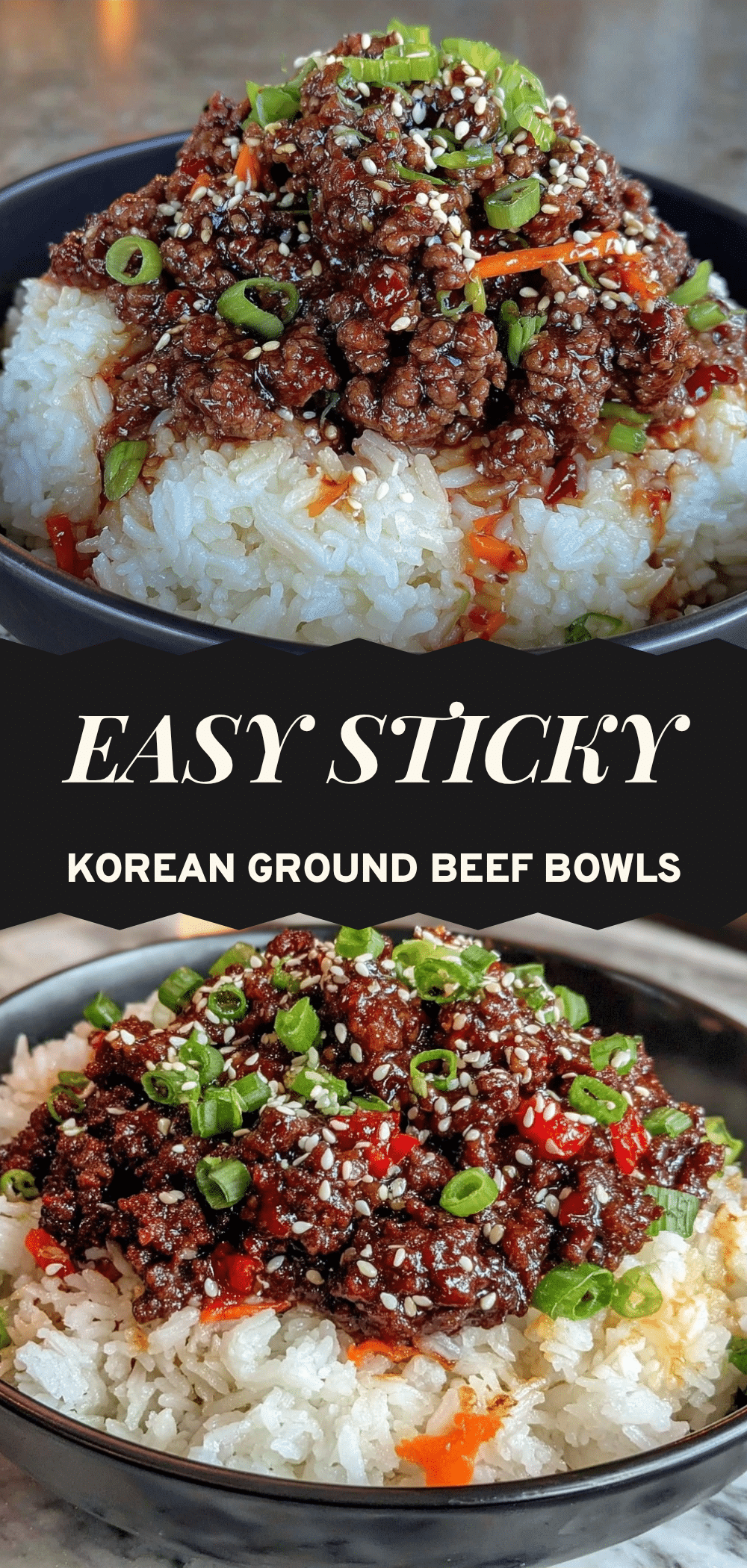
Easy Sticky Korean Ground Beef Bowls for Comfort
- Total Time: 30 minutes
- Yield: 4 servings 1x
Description
A gentle, one-pan comfort food recipe featuring savory-sweet sticky ground beef served over fluffy short-grain rice. Perfect for busy weeknights when you need nourishment without the stress.
Ingredients
- 1 lb (450g) lean ground beef (90/10 or 93/7)
- 2 tbsp (30g) gochujang (Korean chili paste)
- 3 tbsp (45ml) low-sodium soy sauce
- 2 tbsp (30ml) honey
- 3 cloves garlic, minced
- 1 tsp (2g) fresh ginger, grated
- 1 tbsp (15ml) neutral oil (avocado or vegetable)
- 1 tsp (5ml) toasted sesame oil
- 2 cups (400g) short-grain white rice, uncooked
- 3 cups water (for rice)
- Optional garnishes: sliced green onions, sesame seeds
Instructions
- Rinse 2 cups of short-grain rice under cold water until clear. Add to a rice cooker or pot with 3 cups of water.
- Bring rice to a boil, then reduce to low heat, cover, and simmer for 15 minutes. Turn off heat and let sit covered for 10 minutes. Fluff with a fork and set aside.
- In a small bowl, whisk together gochujang, soy sauce, honey, and 1 teaspoon of sesame oil until smooth.
- Heat neutral oil in a large skillet over medium-high heat. Add ground beef and break into small crumbles with a wooden spoon.
- Cook beef for 5-6 minutes, stirring occasionally, until browned and no longer pink. Avoid crowding the pan.
- Add minced garlic and grated ginger to the beef. Stir constantly for 1 minute until fragrant but not browned.
- Pour the sauce mixture over the beef. Stir to coat evenly.
- Reduce heat to medium-low and simmer for 3-4 minutes until the sauce thickens and becomes sticky and glossy.
- Remove from heat. Drizzle with remaining sesame oil and stir. Taste and adjust seasoning if needed.
- Serve the sticky beef over a bed of fluffy white rice. Garnish with green onions and sesame seeds.
Notes
[‘Do not crowd the pan when browning beef to ensure proper caramelization rather than steaming.’, ‘Gochujang brands vary in spiciness; adjust amount based on heat preference.’, ‘Short-grain rice is preferred for its sticky texture which helps hold the sauce.’, ‘Store beef and rice separately in the refrigerator for up to 4 days to prevent rice from becoming soggy.’, ‘Freezes well for up to 3 months; thaw in fridge and reheat gently with a splash of water.’]
- Prep Time: 15 minutes
- Cook Time: 15 minutes
- Category: Main Course
- Cuisine: Korean
Nutrition
- Serving Size: 1 bowl (approx. 1/4
- Calories: 450
- Sugar: 12
- Sodium: 900
- Fat: 18
- Saturated Fat: 6
- Carbohydrates: 50
- Fiber: 1
- Protein: 25
Keywords: Korean ground beef, sticky beef bowls, comfort food, easy dinner, one-pan meal, gochujang recipe, weeknight dinner, Korean beef


