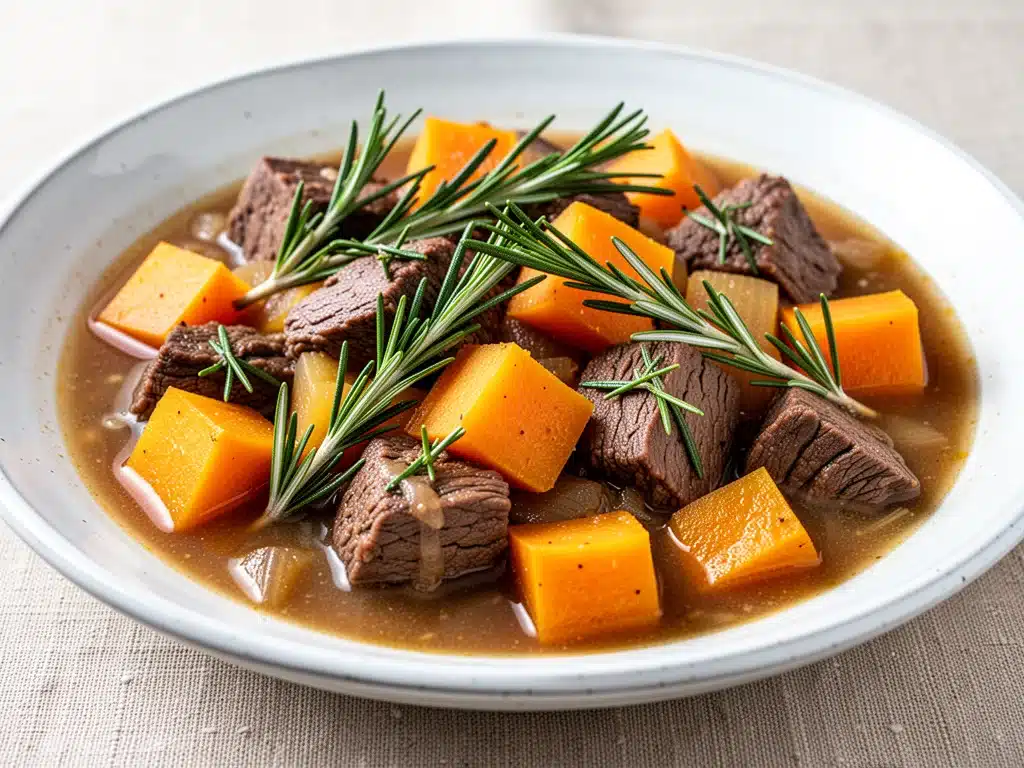
Last Friday, I came home with a headache that felt like a drum solo, my car was covered in autumn leaves, and the temperature outside had dropped enough to make me shiver in my car. I didn’t want to cook. I definitely didn’t want to order takeout, which usually means spending $30 on food that arrives lukewarm and tastes like cardboard. I just wanted warmth. I wanted something that smelled like my grandmother’s kitchen on a rainy Sunday. I wanted a hug in a bowl.
So I opened the freezer, found a bag of frozen beef cubes I’d bought on sale three weeks ago, and grabbed a butternut squash that had been sitting on my counter looking a bit shriveled. I figured, why not? It’s the kind of meal you throw together when you have zero energy but high expectations for comfort. What came out of the pot wasn’t just “edible.” It was incredible. Deeply savory, sweet from the squash, tender enough to fall apart with a spoon, and smelling so good that my husband walked in from the garage and actually stopped mid-task to sniff the air.
This Autumn Beef and Butternut Squash Stew is now officially my go-to solution for those “I can’t decide what to eat” nights. It’s a 30-Min Fall Dinner in spirit, though realistically, if you chop fast, it takes about 45 minutes from start to finish. But honestly? That’s still faster than waiting for a delivery driver who can’t find your driveway.
I’ve made this at least six times in the last two months. The first time, I was skeptical that beef and squash would work together. I thought it might be too sweet, or the beef might get mushy. But after tweaking the spices and nailing the sear, I realized this combination is pure magic. The sweetness of the squash balances the richness of the beef, and the spices tie it all together with that cozy, spicy warmth that screams “fall.” If you’re looking for a way to use up those leftover squash or just want a hearty, one-pot meal that doesn’t require babysitting, this is it. It’s rustic, it’s forgiving, and it tastes like you spent hours simmering it on the stove (even if you didn’t).
Why You’ll Love This Autumn Beef and Butternut Squash Stew
There are a hundred reasons to make this stew, but let’s be real—you’re here because you want dinner to just *work*. Here’s why this recipe has earned a permanent spot in my weekly rotation, right next to my slow cooker beef and barley stew.
- It’s a One-Pot Wonder — Seriously. You sear the beef in the pot, sauté the veggies in the same pot, and simmer everything in the same pot. That means one pot to wash. For someone who hates doing dishes after a long day, this is a game-changer. I don’t know about you, but I’d rather scrub a single Dutch oven than a sink full of pans.
- Sweet Meets Savory Perfection — I used to think stew was just meat and potatoes. This proves me wrong. The butternut squash breaks down slightly into the broth, thickening it naturally and adding a subtle sweetness that cuts through the salty, savory beef. It’s complex flavor without complex effort.
- Freezer-Friendly Flexibility — I often buy beef in bulk when it’s on sale and cube it myself. This recipe freezes beautifully. I’ll make a double batch on a lazy Sunday, freeze half in portions, and pull it out for a weeknight when I’m too tired to think. It reheats just as well as the first day.
- Uses What You Have — You don’t need a trip to a specialty store. The spices are basic pantry staples. The squash is available everywhere in the fall. The beef? Just grab whatever cut you can find on sale. It’s budget-friendly and incredibly satisfying.
- Meal Prep Champion — This tastes even better the next day. The flavors meld together overnight. I make this on Sunday, eat it for Monday and Tuesday, and freeze the rest. It’s the ultimate “set it and forget it” meal prep strategy that doesn’t taste like cafeteria food.
This stew is my answer to “what’s for dinner?” when the weather turns cold and my motivation turns off. It’s warm, it’s filling, and it makes your whole house smell amazing. Plus, it’s a great way to sneak in some veggies if you’ve got picky eaters (though my kids devour this one without complaining).
Ingredients You’ll Need for Autumn Beef and Butternut Squash Stew
Here’s the thing about this recipe: the ingredient list is short, but the quality matters. You don’t need fancy stuff, but you do need good basics. I’m particular about a few items here, and I’ll tell you exactly why so you don’t end up with a mediocre version.
For the Base
Beef chuck roast (1.5 lbs / 700g, cut into 1-inch cubes) — This is the most important ingredient. Chuck roast has enough fat to stay tender during simmering. Lean cuts like sirloin will turn into shoe leather. If you can’t find chuck, look for stewing beef labeled as “chuck” or “shoulder.” Avoid anything labeled “round” unless you’re prepared for chewy meat.
Butternut squash (1 medium, about 2-3 lbs / 1-1.5 kg, peeled and cubed) — Look for one that feels heavy for its size and has a matte, tan skin. The flesh should be deep orange. Peel it carefully—it’s tough! Cube it into 1-inch pieces so they hold their shape but cook through. Don’t make them too small, or they’ll dissolve into mush.
Yellow onion (1 large, diced / about 300g) — This adds the savory foundation. Yellow onions are sweeter when cooked than white onions, which is what we want here. If you only have red onions, they work too, but they’ll turn the stew a bit purple. Not ideal for aesthetics.
Garlic (4 cloves, minced / about 2 tablespoons) — Fresh garlic is non-negotiable. Jarred garlic has a metallic aftertaste that clashes with the delicate sweetness of the squash. Mince it yourself. If you’re feeling lazy, use a garlic press, but chop it finely for better texture.
For the Flavor
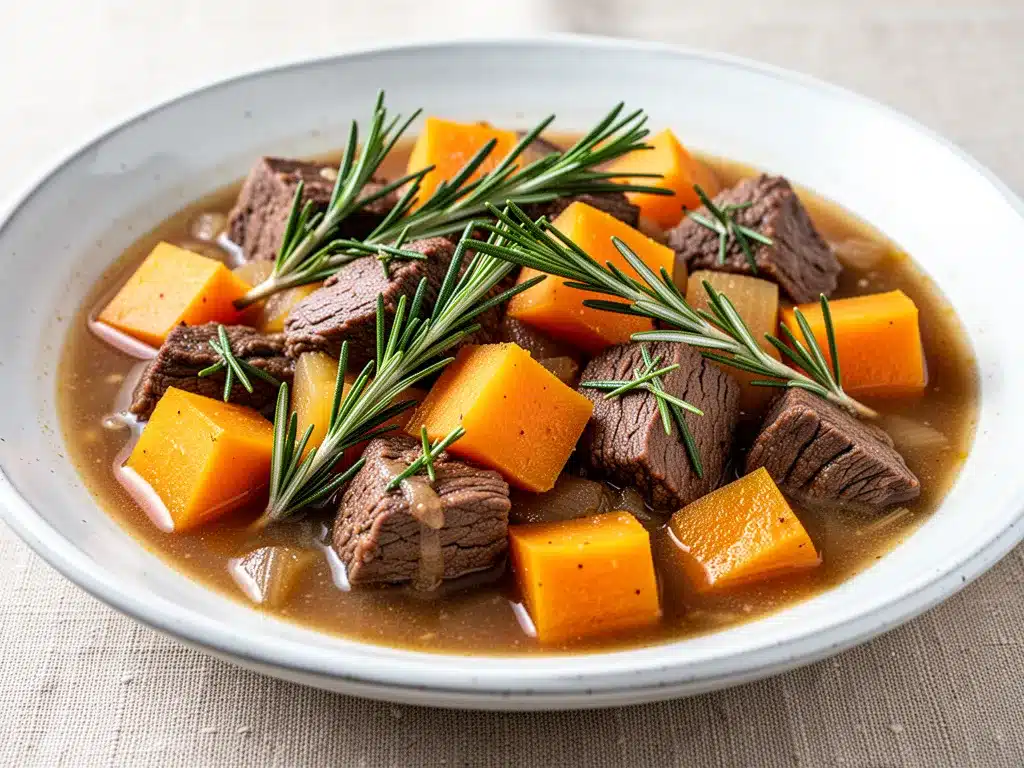
Beef broth (3 cups / 720ml) — Use low-sodium broth so you can control the saltiness yourself. Store-bought broth is fine, but if you have homemade stock, use that. It adds so much depth. Avoid using bouillon cubes if you can help it—they often have too much MSG and weird flavors.
Tomato paste (2 tablespoons) — This isn’t for acidity; it’s for umami. It gives the stew that deep, rich color and savory backbone. Don’t skip it. It’s the secret weapon that makes the stew taste “expensive.”
Tomato sauce (1 can / 15 oz / 425g) — Use a simple, no-salt-added tomato sauce. It adds body and a touch of tang to balance the sweetness. If you only have crushed tomatoes, that works too, but sauce is smoother.
Dried thyme (1 teaspoon) — Thyme and beef are best friends. It adds an earthy, herbal note that screams “comfort food.” If you don’t have dried thyme, use 1 tablespoon of fresh thyme leaves, but add them at the very end so they don’t lose their flavor.
Smoked paprika (1 teaspoon) — This is the star of the spice blend. It adds a subtle smokiness that mimics slow-cooking. It’s what gives this Autumn Beef and Butternut Squash Stew its signature fall flavor. Don’t use regular paprika; you need the smoked kind for that depth.
Bay leaves (2 leaves) — These infuse the broth with a subtle floral aroma. Remove them before serving! I’ve eaten too many bay leaves in my time, and let me tell you, they are not chewy. They are dangerous.
Butter (2 tablespoons) — For sautéing. Butter adds richness that oil can’t match. I use unsalted butter so I can control the salt.
Salt and black pepper (to taste) — Season generously at each stage. Don’t wait until the end.
Optional Add-ins
Carrots (2 medium, chopped) — I like to add carrots for extra color and sweetness. They pair perfectly with the squash. If you hate carrots, skip them. No judgment.
Potatoes (1 large, cubed) — For a heartier stew, add diced potatoes. Yukon Golds are best because they hold their shape. Add them with the broth so they cook through.
Fresh parsley (2 tablespoons, chopped) — For garnish. It adds a pop of green and freshness to cut through the richness. It’s not essential, but it makes the dish look like you tried.
Equipment Needed
You don’t need fancy gadgets for this. Here’s what I actually use, and what you can swap if you don’t have it.
Dutch oven or heavy-bottomed pot — I use a 6-quart Dutch oven. It needs to be heavy enough to distribute heat evenly and keep the stew simmering gently. A ceramic casserole dish works too, but make sure it’s oven-safe if you plan to transfer it.
Large skillet — If your Dutch oven is small, use a skillet to sear the beef first. You need a good sear for flavor. A non-stick pan works, but cast iron or stainless steel gives a better crust.
Sharp chef’s knife — For chopping the squash and beef. A dull knife will slip on the squash skin. Learn to sharpen your knives. It’s a safety issue and a cooking quality issue.
Peeler — A Y-peeler is best for removing the tough squash skin. It’s easier than a chef’s knife and safer.
Wooden spoon — For stirring. It won’t scratch your pot and handles heat well.
Measuring cups and spoons — Standard stuff. Accuracy matters less here than with baking, but good to have.
Colander — For rinsing the beef if you want to remove excess blood. Optional, but I do it.
How to Make It: Step-by-Step
Alright, let’s make this! I’m walking you through exactly how I do it, including the little tricks I’ve picked up over the years. This Autumn Beef and Butternut Squash Stew is simple, but technique matters.
Step 1: Prep Your Ingredients (10 minutes)
Before you turn on the stove, get everything ready. Cube the beef, peel and cube the squash, dice the onion, and mince the garlic. I know it seems like a lot of chopping, but it’s better to have everything measured out than to be scrambling while the beef burns. Pat the beef dry with paper towels—this is crucial for getting a good sear. Wet beef steams instead of sears.
Step 2: Sear the Beef (5-7 minutes)
Heat the butter in your Dutch oven or large pot over medium-high heat. Once the butter is foamy, add the beef cubes in a single layer. Don’t crowd the pan! If you crowd it, the beef will steam and turn gray. Sear in batches if needed. Let the beef sit undisturbed for 2-3 minutes until it forms a deep brown crust. Flip and sear the other side. Remove the beef to a plate. This browning is called the Maillard reaction, and it’s where most of the flavor lives. Don’t skip this step.
Step 3: Sauté the Aromatics (3-4 minutes)
In the same pot (don’t clean it! That beef flavor is gold), add the diced onion. Cook for 2-3 minutes until soft. Add the garlic and smoked paprika. Cook for 1 minute, stirring constantly. The garlic should smell fragrant, not brown. Browned garlic tastes bitter. If the pot looks dry, add a splash of oil.
Step 4: Build the Stew Base (2 minutes)
Stir in the tomato paste. Cook it for 1 minute, stirring constantly. This “cooks out” the raw tomato taste and deepens the flavor. Then, pour in the beef broth and tomato sauce. Scrape the bottom of the pot with your wooden spoon to release all the browned bits (called “fond”). Those bits are pure flavor. Add the bay leaves and dried thyme.
Step 5: Simmer the Beef (15-20 minutes)
Return the seared beef to the pot. Bring to a boil, then reduce heat to low. Cover and simmer for 15-20 minutes. The beef needs to start getting tender before you add the squash. If you add the squash too early, it will disintegrate. Check the beef with a fork; it should offer slight resistance but not be hard.
Step 6: Add the Squash (10-15 minutes)
Add the cubed butternut squash (and carrots/potatoes if using). Stir to combine. Cover and simmer for another 10-15 minutes, or until the squash is tender when pierced with a fork. The squash will start to break down slightly, thickening the stew naturally. Taste the broth. Add salt and pepper to taste. Remember, the tomato sauce and broth already have some salt, so go easy.
Step 7: Finish and Serve (2 minutes)
Remove the bay leaves. Stir in fresh parsley if using. Serve hot in bowls, topped with extra parsley or a dollop of sour cream if you’re feeling fancy. Pair with crusty bread for dipping. The stew should be thick, hearty, and aromatic.
Expert Tips & Tricks
Here’s everything I’ve learned from making this dozens of times. These tips will save you from my mistakes.
- Don’t Skip the Sear — I know it’s tempting to just throw everything in the pot. But searing the beef adds a depth of flavor that simmering alone can’t achieve. It’s the difference between “okay” and “wow.”
- Pat the Beef Dry — Moisture is the enemy of browning. If the beef is wet, it’ll steam. Paper towels are your friend.
- Use Low-Sodium Broth — Store-bought broths vary wildly in salt content. Using low-sodium lets you control the seasoning. If you use regular broth, taste before adding extra salt.
- Squash Size Matters — Cut your squash into uniform 1-inch cubes. If they’re too big, they’ll be raw when the beef is done. If they’re too small, they’ll turn to mush. Uniformity ensures even cooking.
- Let It Rest — Like many stews, this tastes better after it sits for 10 minutes off the heat. The flavors meld, and the beef finishes tenderizing. If you can wait, wait.
Variations & Substitutions
Once you’ve nailed the basic version, here’s how you can mix it up. I’ve tried all of these.
- Vegan Version — Swap beef for cubed portobello mushrooms or chickpeas. Use vegetable broth and olive oil. Add a tablespoon of nutritional yeast for umami. It’s surprisingly hearty.
- Spicy Kick — Add a teaspoon of cayenne pepper or a diced jalapeño with the garlic. It’s great if you like heat.
- Herb Swap — If you don’t have thyme, use rosemary or oregano. Rosemary is stronger, so use half the amount. It gives a piney, woody flavor that’s delicious.
- Gluten-Free — This recipe is naturally gluten-free, but check your broth and tomato sauce labels. Most are safe, but some broths contain wheat-derived flavorings.
- Slow Cooker Method — Sear the beef and sauté veggies in a pan, then transfer to a slow cooker. Add broth, sauce, and spices. Cook on low for 6-8 hours. Add squash in the last hour. It’s easier but lacks the sear flavor.
Serving & Storage
How to Serve: I usually serve this straight from the pot into large bowls. It looks rustic and cozy. Pair it with crusty sourdough bread, garlic bread, or even mashed potatoes for extra comfort. A simple green salad with a vinaigrette cuts through the richness nicely.
Storage: Store leftovers in an airtight container in the fridge for up to 4 days. The stew thickens as it cools because the squash releases starch. This is normal.
Reheating: Reheat gently on the stove over low heat, adding a splash of water or broth if it’s too thick. Microwave in 1-minute intervals, stirring in between. Don’t boil it, or the squash will turn to mush.
Freezing: Yes, this freezes well! Let it cool completely, then freeze in portions for up to 3 months. Thaw in the fridge overnight before reheating. The texture of the squash might soften slightly, but it’s still delicious.
Nutrition Information
I’m not a nutritionist, but here’s the breakdown if you’re tracking. This is per serving (based on 4 servings).
| Nutrient | Amount |
|---|---|
| Calories | 450 |
| Protein | 35g |
| Carbs | 30g |
| Fiber | 6g |
| Fat | 18g |
| Sodium | 600mg |
It’s a protein-packed, veggie-rich meal. The squash adds fiber and vitamins A and C. It’s hearty enough for a main course but not overly heavy. If you’re watching calories, skip the bread and you’re good to go. If you’re not, eat the bread. Life’s too short.
Final Thoughts
So that’s my Autumn Beef and Butternut Squash Stew! It’s simple, it’s flavorful, and it’s the perfect way to cozy up on a chilly night. I’ve made this so many times, and it never fails to satisfy. It’s my answer to “what’s for dinner?” when I want something warm and comforting without spending hours in the kitchen.
Make it yours! Add more veggies, swap the spices, or serve it with your favorite bread. The best recipes are the ones you adapt to your tastes. If you make this, drop a comment and let me know what you think! I love hearing how recipes turn out in your kitchen. And if something doesn’t work, tell me that too—I’m here to help troubleshoot.
Happy cooking! And I hope your kitchen smells half as good as mine does right now.
Frequently Asked Questions
Can I use sweet potato instead of butternut squash?
Yes, you can! Sweet potatoes work well, but they’re softer and sweeter. They’ll break down faster, so add them in the last 10 minutes of cooking. The flavor will be sweeter, which is nice if you like that profile. Just keep an eye on them so they don’t turn to mush.
Why did my stew turn out watery?
This usually happens if you didn’t simmer it long enough, or if you used a very watery broth. The squash releases starch, which thickens the stew, but it takes time. Let it simmer uncovered for the last 10 minutes to reduce the liquid. If it’s still too thin, you can mix a teaspoon of cornstarch with cold water and stir it in.
Can I make this in a slow cooker?
Absolutely. Sear the beef and sauté the veggies first for best flavor, then transfer everything to the slow cooker. Cook on low for 6-8 hours. Add the squash in the last hour so it doesn’t disintegrate. It’s easier, but the sear step is worth the extra 10 minutes.
What kind of beef is best for stew?
Chuck roast is the gold standard. It has connective tissue that breaks down into gelatin, making the meat tender and the stew rich. Avoid lean cuts like sirloin or round, as they’ll be tough. If you can’t find chuck, look for “stewing beef” labeled as chuck or shoulder.
How do I reheat leftovers without it getting dry?
Add a splash of water or broth when reheating. Stews thicken as they cool, so the extra liquid brings it back to the right consistency. Reheat gently on the stove, stirring frequently. Don’t boil it, or the squash will break down too much.
Pin This Recipe!
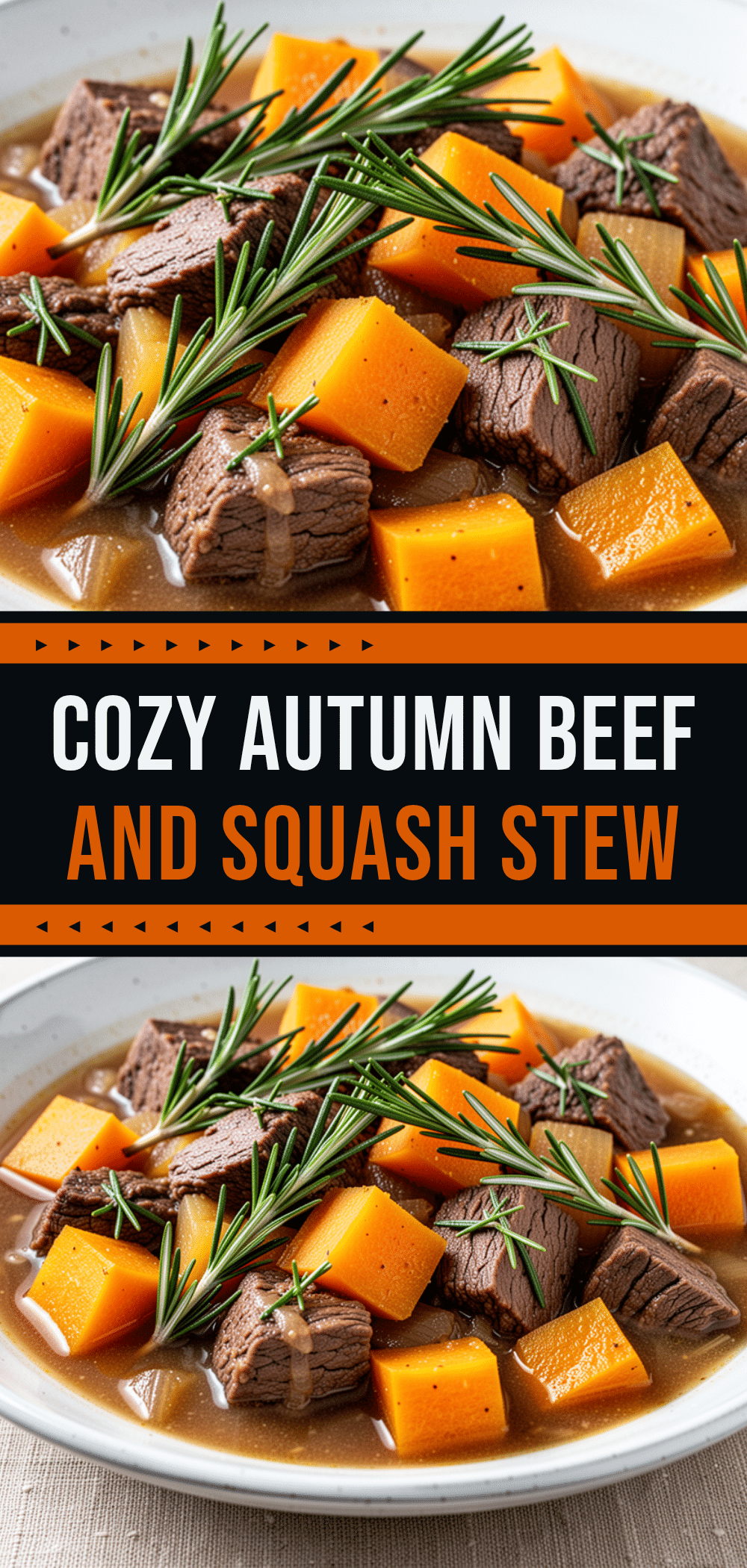
Autumn Beef and Butternut Squash Stew
- Total Time: 45 minutes
- Yield: 4 servings 1x
Description
A hearty, one-pot fall dinner featuring tender beef chuck and sweet butternut squash simmered in a savory, spiced broth. This comforting stew is perfect for chilly nights and comes together in about 45 minutes.
Ingredients
- 1.5 lbs beef chuck roast, cut into 1-inch cubes
- 1 medium butternut squash (2–3 lbs), peeled and cubed into 1-inch pieces
- 1 large yellow onion, diced
- 4 cloves garlic, minced
- 3 cups low-sodium beef broth
- 2 tablespoons tomato paste
- 1 can (15 oz) tomato sauce
- 1 teaspoon dried thyme
- 1 teaspoon smoked paprika
- 2 bay leaves
- 2 tablespoons unsalted butter
- Salt and black pepper, to taste
- Optional: 2 medium carrots, chopped
- Optional: 1 large potato, cubed
- Optional: 2 tablespoons fresh parsley, chopped
Instructions
- Prep ingredients: Cube the beef, peel and cube the squash, dice the onion, and mince the garlic. Pat the beef dry with paper towels to ensure a good sear.
- Sear the beef: Heat butter in a Dutch oven or heavy-bottomed pot over medium-high heat. Sear beef cubes in batches (do not crowd the pan) for 2-3 minutes per side until browned. Remove beef to a plate.
- Sauté aromatics: In the same pot, cook diced onion for 2-3 minutes until soft. Add garlic and smoked paprika, cooking for 1 minute until fragrant.
- Build the base: Stir in tomato paste and cook for 1 minute. Pour in beef broth and tomato sauce, scraping the bottom of the pot to release browned bits. Add bay leaves and dried thyme.
- Simmer beef: Return seared beef to the pot. Bring to a boil, then reduce heat to low, cover, and simmer for 15-20 minutes until beef is starting to tenderize.
- Add squash: Add cubed butternut squash (and carrots/potatoes if using). Cover and simmer for another 10-15 minutes until squash is tender.
- Finish: Remove bay leaves. Stir in fresh parsley if using. Taste and adjust seasoning with salt and pepper. Serve hot with crusty bread.
Notes
Pat the beef dry before searing to ensure browning rather than steaming. Use low-sodium broth to control salt levels. The stew thickens as it cools due to the squash releasing starch. It freezes well for up to 3 months.
- Prep Time: 10 minutes
- Cook Time: 35 minutes
- Category: Main Course
- Cuisine: American
Nutrition
- Serving Size: 1 bowl
- Calories: 450
- Sugar: 8
- Sodium: 600
- Fat: 18
- Saturated Fat: 7
- Carbohydrates: 30
- Fiber: 6
- Protein: 35
Keywords: beef stew, butternut squash, fall dinner, one pot meal, comfort food, autumn recipes, easy dinner


