It’s 11 PM. The house is quiet. I’m standing in my kitchen, staring at that small glass jar in the back of my fridge with the lid slightly askew. Inside is about half a cup of grayish, bubbly slosh. It smells like old socks and yeast. It’s my sourdough starter discard. And honestly? For years, I just dumped it down the sink.
Don’t judge me too hard. I started baking bread during the great pandemic lockdown of 2020. I was obsessed. I bought a scale, learned about hydration percentages, and woke up at 4 AM to feed a pet that demanded to be fed twice a day. But then life happened. Work got busy. Travel resumed. The daily feeding routine became a burden, not a joy.
So I stopped. I fed it one last time, left it in the fridge, and forgot about it for three weeks. When I finally remembered it, I had two choices: toss it or bake with it. Tossing it felt like throwing away money. Baking it felt like work. Then I remembered those grandma’s bread pudding recipes I’d saved years ago. If I could use stale bread for something sweet, why not use sourdough discard?
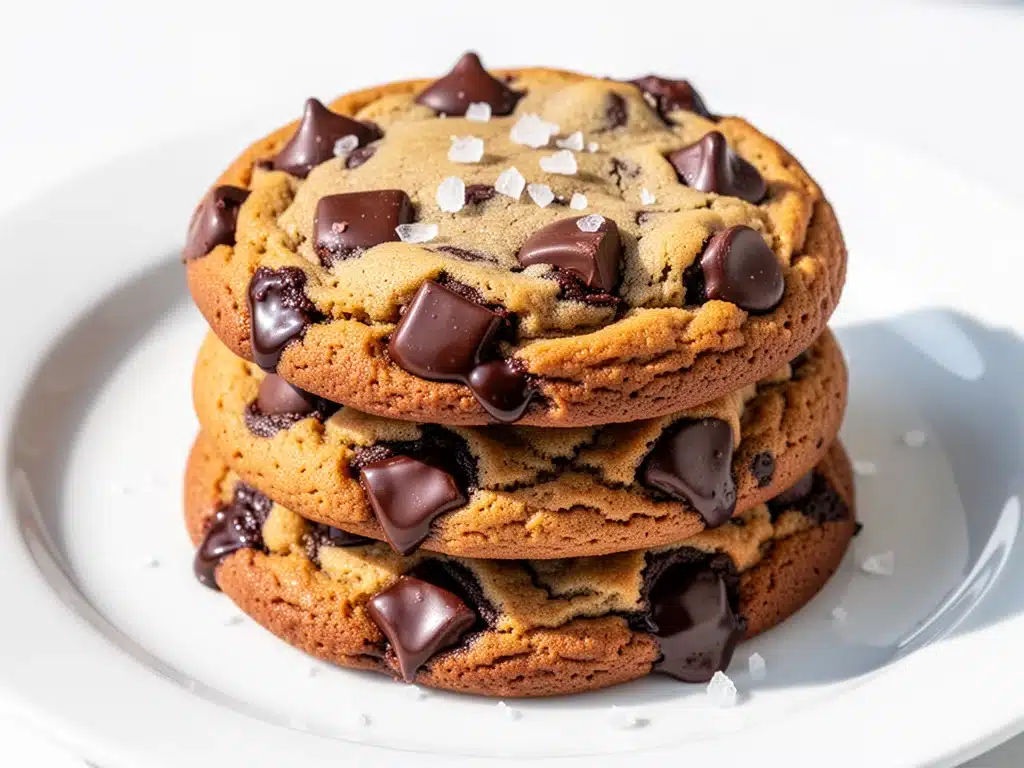
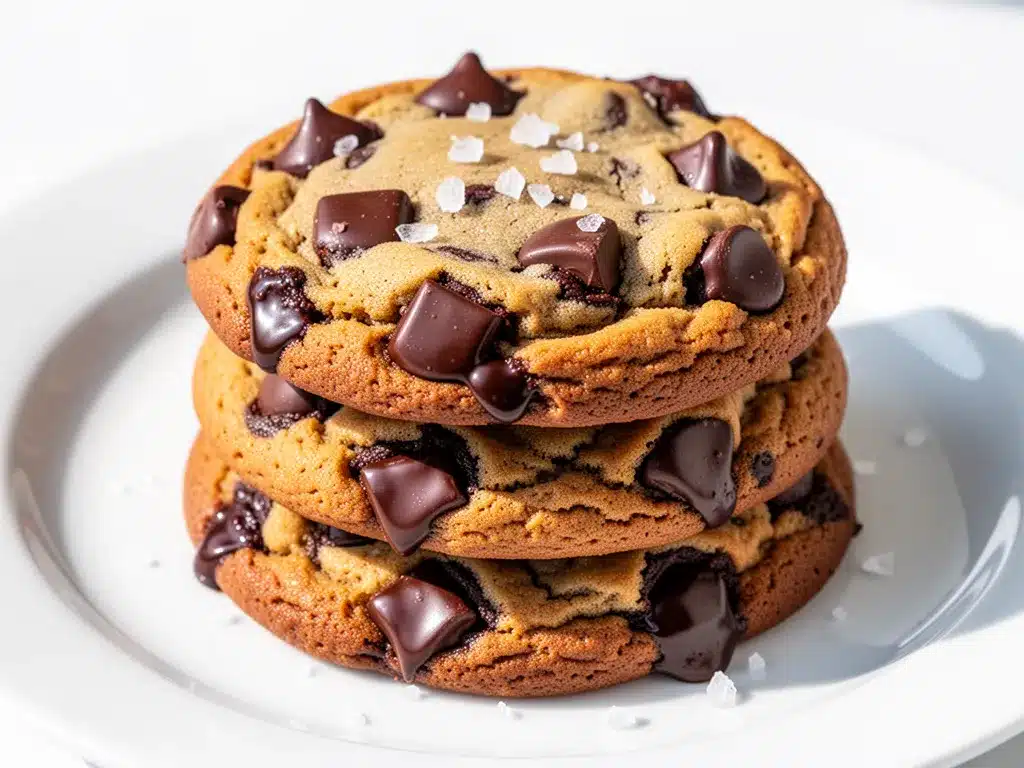
That night, I didn’t make bread. I made cookies. Chewy, gooey, chocolate-laden sourdough discard chocolate chip cookies. I ate three in a row while they cooled. They were the best cookies I’d ever made. Not just because of the chocolate (though the chunks were generous), but because of the texture. The slight tang from the starter cut through the sweetness, and the discard created a chewiness that regular butter-based cookies just can’t match.
Since then, I’ve made these cookies dozens of times. They’ve become my go-to way to use up discard without guilt. They’re perfect for busy mornings, lazy afternoons, or when you just need a hug in cookie form. If you’ve been hoarding your discard wondering what to do with it, stop. Start baking these.
Why You’ll Love These Sourdough Discard Cookies
I know what you’re thinking. “Another cookie recipe? Really?” But hear me out. These aren’t just any cookies. They solve a real problem for sourdough bakers (and non-bakers who have discard in their fridge) while delivering a flavor profile that’s surprisingly complex.
- Zero Waste Baking — This is the biggest selling point for me. I usually discard about half my starter every time I feed it. That adds up to a lot of wasted flour and water over a week. These cookies turn “trash” into treasure. It feels good to use every bit of my ingredients.
- Chewy, Not Crispy — Most cookie recipes aim for crisp edges. These are all about the chew. The acidity in the sourdough interacts with the baking soda to create a tender, cake-like interior that stays soft for days. I’ve kept these in an airtight container for four days, and they’re still soft. Seriously.
- Complex Flavor — Plain sugar cookies can be one-note. These have a subtle tang from the fermentation that pairs beautifully with dark chocolate. It’s not a “sour” cookie, but it has depth. It tastes like a high-end bakery cookie, not a grocery store package.
- Simple Ingredients — You don’t need fancy flours or rare extracts. Just butter, sugar, eggs, flour, baking soda, salt, chocolate chips, and your discard. If you can make brownies, you can make these. I’ve made these while watching TV, half-asleep, and they still came out perfect.
- Meal Prep Friendly — The dough can be frozen. I often make a batch of dough, scoop it into balls, and freeze them on a tray. Then I transfer them to a bag. When I want cookies, I just pop a few in the oven. It’s like having fresh-baked cookies ready in 12 minutes, even on a busy Tuesday.
These cookies have saved me from throwing away discard more times than I can count. They’re reliable, delicious, and make my kitchen smell amazing instead of like a failed bread experiment.
Ingredients You’ll Need
Here’s the good news: you probably have 90% of this already. I’m particular about a few things, but for the most part, this is a pantry-friendly recipe. I’ve listed US measurements first, with metric in parentheses, because I know we all bake differently.
For the Dough Base
Sourdough Discard (1 cup / 240g) — This is the star. It doesn’t need to be active or bubbly. It just needs to be discarded. If your discard has been in the fridge for a while, give it a stir. If it smells okay, use it. If it smells like acetone or nail polish, feed it and wait 24 hours, or toss it and use fresh discard. But honestly, even slightly aged discard works fine in cookies.
Unsalted Butter (½ cup / 115g) — Softened. Not melted. This is crucial. If you melt the butter, your cookies will spread too thin and become crispy instead of chewy. Take the butter out of the fridge 30 minutes before you start. If you’re in a rush, you can microwave it on low power for 10-second bursts, but check frequently. You want it pliable, not liquid.
Granulated Sugar (½ cup / 100g) — This helps with crisp edges. Don’t skip it. The sugar draws out moisture and creates that slight crunch on the outside while keeping the inside soft.
Brown Sugar (½ cup / 110g, packed) — This is the key to chewiness. The molasses in brown sugar adds moisture and flavor. Use dark brown sugar if you want a deeper, toffee-like flavor. I usually use light brown sugar, but both work well.
Large Egg (1) — Room temperature. This binds the dough. If your egg is cold, it might seize up the butter. Let it sit on the counter for 15 minutes if you forgot.
Vanilla Extract (1 teaspoon) — Pure vanilla, please. I know it’s expensive, but the artificial stuff tastes chemical in cookies. A little goes a long way.
For the Dry Mix
All-Purpose Flour (1 ½ cups / 190g) — I use King Arthur or Gold Medal. Cake flour makes them too tender; bread flour makes them too chewy. AP is the sweet spot. Spoon and level your flour—don’t scoop and pack, or you’ll end up with dry cookies.
Baking Soda (½ teaspoon) — This reacts with the acidity in the sourdough to help the cookies rise slightly and brown. Make sure it’s fresh. If it’s been in your cabinet for two years, replace it.
Salt (½ teaspoon) — Fine sea salt or table salt. Salt enhances flavor. Don’t skimp. It balances the sweetness.
For the Good Stuff
Chocolate Chips (1 cup / 170g) — I use semi-sweet chocolate chips. Ghirardelli or Guittard are my favorites. But honestly? Chop up a chocolate bar. It’s worth the extra two minutes. Melted pockets of chocolate are superior to uniform chips.
Optional: Flaky Sea Salt — A sprinkle on top right after baking. It sounds fancy, but it just makes the chocolate pop. Maldon salt is great for this.
Pro Tip: I sometimes add a handful of chopped walnuts or pecans. It adds crunch and pairs well with the chocolate. But if you’re making these for kids, skip the nuts. I learned that the hard way with my niece.
Equipment Needed
You don’t need fancy gadgets for this. Here’s what I actually use:
Large Mixing Bowl — Glass or ceramic is best. You need enough space to mix everything without splattering.
Electric Mixer or Wooden Spoon — I prefer a hand mixer for the first part to cream the butter and sugars. It takes 2 minutes and ensures a smooth dough. But if you’re old-school, a wooden spoon works fine. It just takes a little arm strength.
Rubber Spatula — For folding in the chocolate chips. A spatula gets every bit of dough out of the bowl. I’ve lost count of how many cookies I’ve saved from sticking to the bottom of the bowl with a spatula.
Baking Sheets — Two standard half-sheet pans. I use non-stick sheets. If yours are dark, lower the oven temperature by 25°F. Dark pans absorb more heat and can burn the bottoms.
Parchment Paper — Line your sheets. It makes cleanup instant and prevents sticking. I never bake cookies directly on bare metal anymore. It’s a hassle and they often break when you try to remove them.
Cooling Rack — Optional, but helpful. If you don’t have one, just let the cookies cool on the pan for 5 minutes, then transfer them to a clean counter or plate. Hot cookies are fragile.
Cookie Scoop — I use a 1.5 tablespoon scoop. It ensures uniform size so they bake evenly. But if you don’t have one, use two spoons to drop mounds. Just try to keep them similar in size.
How to Make Sourdough Discard Chocolate Chip Cookies
Alright, let’s get baking. This is easy, but there are a few tricks to get that perfect chew.
Step 1: Prep Your Oven and Pans (5 minutes)
Preheat your oven to 350°F (175°C). This is a moderate temperature that allows the cookies to bake through without burning the edges. Line your baking sheets with parchment paper. If you’re in a hurry, you can grease the pans lightly, but parchment is better for even baking.
Step 2: Cream the Butter and Sugars (2-3 minutes)
In a large bowl, combine the softened butter, granulated sugar, and brown sugar. Mix on medium speed until light and fluffy. This takes about 2 minutes. You’re incorporating air into the butter, which helps the cookies rise slightly. If you’re using a wooden spoon, mix vigorously for 3-4 minutes. The mixture should look pale and creamy.
Step 3: Add Wet Ingredients (1 minute)
Add the egg and vanilla extract. Mix until combined. Then, pour in the sourdough discard. Mix again until the dough is smooth and uniform. The discard will make the dough look a bit wetter than usual, but that’s okay. It adds moisture and tang.
Step 4: Mix in Dry Ingredients (2 minutes)
In a separate bowl, whisk together the flour, baking soda, and salt. Slowly add the dry ingredients to the wet mixture. Mix on low speed until just combined. Do not overmix. Overmixing develops gluten, which makes cookies tough. Stop as soon as you see no streaks of flour. The dough will be soft and slightly sticky.
Step 5: Fold in Chocolate Chips (1 minute)
Add the chocolate chips (and nuts, if using). Fold them in with a spatula. Make sure they’re distributed evenly. If you want a luxurious cookie, reserve a few chips to press into the top of each cookie before baking.
Step 6: Scoop and Bake (12-14 minutes)
Scoop tablespoon-sized balls of dough onto the prepared baking sheets, spacing them about 2 inches apart. They will spread. Bake for 12-14 minutes. The cookies are done when the edges are golden brown but the centers still look slightly soft and underbaked. They will firm up as they cool. Do not overbake, or you’ll lose that chewiness.
Step 7: Cool and Serve (10 minutes)
Let the cookies cool on the baking sheet for 5 minutes. Then transfer them to a cooling rack. If you’re impatient (like me), you can eat one warm, but be careful—the center is molten hot. Sprinkle with flaky sea salt if desired. Enjoy warm with a glass of cold milk.
Total Time: About 30 minutes (5 minutes prep, 12-14 minutes bake, 10 minutes cool).
Expert Tips & Tricks
Here’s everything I’ve learned from making these dozens of times. These tips will save you from my mistakes.
Chill the Dough (If You Have Time) — If you can chill the dough for 30 minutes to an hour, the cookies will be thicker and chewier. The cold butter melts slower in the oven, giving the structure time to set. But if you’re lazy (and I often am), you can skip this. They’ll still be good, just slightly flatter.
Use High-Quality Chocolate — I can’t stress this enough. The butter and sugar are simple. The chocolate is the star. Use a good brand. I like Ghirardelli 60% Cacao. It’s not too sweet and has a rich flavor. If you use cheap chips, the cookies will taste artificial.
Don’t Overbake — This is the #1 mistake. Cookies continue to cook on the hot pan after you take them out of the oven. If they look done in the oven, they’ll be overdone on the counter. Pull them when the edges are golden but the center is still soft.
Measure Flour Correctly — If your cookies are cakey or dry, you probably used too much flour. Spoon the flour into the measuring cup and level it off with a knife. Don’t scoop directly from the bag. That packs the flour and adds extra volume.
Freeze the Dough Balls — For easy snacking, scoop the dough into balls and freeze them on a tray. Once frozen, transfer to a bag. Bake from frozen, adding 1-2 minutes to the bake time. This is perfect for last-minute guests or midnight cravings.
Adjust for Altitude — If you live above 3,000 feet, you may need to adjust. Increase oven temperature by 15°F and decrease sugar by 1 tablespoon. I don’t live at high altitude, but my friend in Denver swears by this. Always test a batch first.
Variations & Substitutions
Once you’ve mastered the basic version, here’s how you can mix it up. I’ve tried all of these.
Double Chocolate — Add 2 tablespoons of cocoa powder to the dry ingredients. Use chocolate chips and chopped chocolate bars. It’s intense and rich. My husband’s favorite.
White Chocolate Macadamia — Swap chocolate chips for white chocolate chips and add ½ cup chopped macadamia nuts. It’s tropical and sweet. Great for holidays.
Peanut Butter — Add ½ cup peanut butter to the wet ingredients. Use peanut butter chips or regular chips. It’s salty and sweet perfection.
Oatmeal Raisin — Add 1 cup rolled oats and ½ cup raisins. Skip the chocolate. It’s a different cookie, but the sourdough tang works well with cinnamon and raisins. Add 1 teaspoon cinnamon for extra flavor.
Gluten-Free — Use a 1:1 gluten-free flour blend. The results are surprisingly similar. I’ve used Bob’s Red Mill and King Arthur’s blend, and both work well. Just make sure the blend includes xanthan gum, or add ½ teaspoon.
Dairy-Free — Use vegan butter sticks (not tub spread). The texture will be slightly different, but still delicious. Use dairy-free chocolate chips.
Serving & Storage
How to serve and keep these fresh.
How to Serve: These are best fresh. Serve them warm with a cold glass of milk. They’re also great for picnics, potlucks, or gift baskets. I often wrap them in cellophane bags with a ribbon for housewarming gifts.
Storage: Store in an airtight container at room temperature for up to 5 days. They stay soft because of the sourdough. If they start to dry out, add a slice of bread to the container. The cookies will absorb the moisture from the bread.
Freezing: You can freeze baked cookies for up to 3 months. Thaw at room temperature. Or freeze the dough balls as mentioned above. Both work great.
Reheating: If you have leftovers (unlikely), microwave a cookie for 10-15 seconds to soften it. It’ll be like fresh out of the oven.
Nutrition Information
I’m not a nutritionist, but here’s the breakdown if you’re tracking. Keep in mind, these are estimates based on standard ingredients.
Per Cookie (makes about 24 cookies):
- Calories: 180
- Protein: 2g
- Carbs: 24g
- Fiber: 1g
- Sugar: 16g
- Fat: 9g
- Saturated Fat: 5g
- Cholesterol: 20mg
- Sodium: 120mg
What’s Good: It’s a treat, so don’t expect a salad. But it’s not overly sweet compared to some cookies. The sourdough adds a bit of complexity that makes you feel like you’re eating something “real.”
What to Know: Higher in sugar and fat. Enjoy in moderation. If you’re watching carbs, stick to one or two cookies.
Final Thoughts
So that’s my go-to way to use sourdough discard. These cookies have saved me from throwing away ingredients, and they’ve saved me from boredom when I’m craving something sweet. They’re easy, delicious, and make great gifts.
If you make these, drop a comment and let me know what you think! I love hearing how recipes turn out in your kitchen. And if something doesn’t work, tell me that too—I’m here to help troubleshoot.
Happy baking! And I hope your kitchen smells half as good as mine does right now.
Frequently Asked Questions
Can I use active sourdough starter instead of discard?
Yes, but the results will be different. Active starter is more liquid and bubbly, which can make the dough wetter. You might need to add a little extra flour. Also, active starter has more yeast, which can make the cookies spread more. Discard is preferred because it’s thicker and has less active yeast, leading to a chewier texture.
Why did my cookies spread too much?
This usually happens if the butter was too warm or if you didn’t chill the dough. Make sure your butter is softened, not melted. If the dough is too soft, chill it in the fridge for 30 minutes before baking. Also, check your baking soda. If it’s old, it won’t react properly, and the cookies might spread unevenly.
Can I freeze the cookie dough?
Yes! Scoop the dough into balls and freeze them on a baking sheet. Once frozen, transfer to a freezer bag. They’ll keep for up to 3 months. Bake from frozen, adding 1-2 minutes to the bake time. This is perfect for having fresh cookies on demand.
Do I need to refrigerate the discard before using it?
It’s best to use discard that’s been in the fridge. If your discard is at room temperature, it might be more active and bubbly, which can affect the texture. Cold discard is thicker and has a more pronounced tang, which I prefer for cookies.
Can I add other mix-ins?
Absolutely. Chopped nuts, dried cranberries, white chocolate chips, or even crushed pretzels work well. Just add them with the chocolate chips. I’ve made these with toffee bits, and they were incredible.
How do I know when the cookies are done?
The edges should be golden brown, and the centers should still look slightly soft. They will firm up as they cool. If they look fully set in the oven, they’ll be overdone. Pull them when they’re still a bit soft in the middle.
Can I make these without sourdough discard?
You can, but you’ll need to substitute the discard with buttermilk or milk plus a teaspoon of lemon juice or vinegar. The acidity in the sourdough reacts with the baking soda, so you need something acidic to mimic that reaction. But honestly, the sourdough flavor is part of the charm, so I’d recommend using it if you have it.
Pin This Recipe!
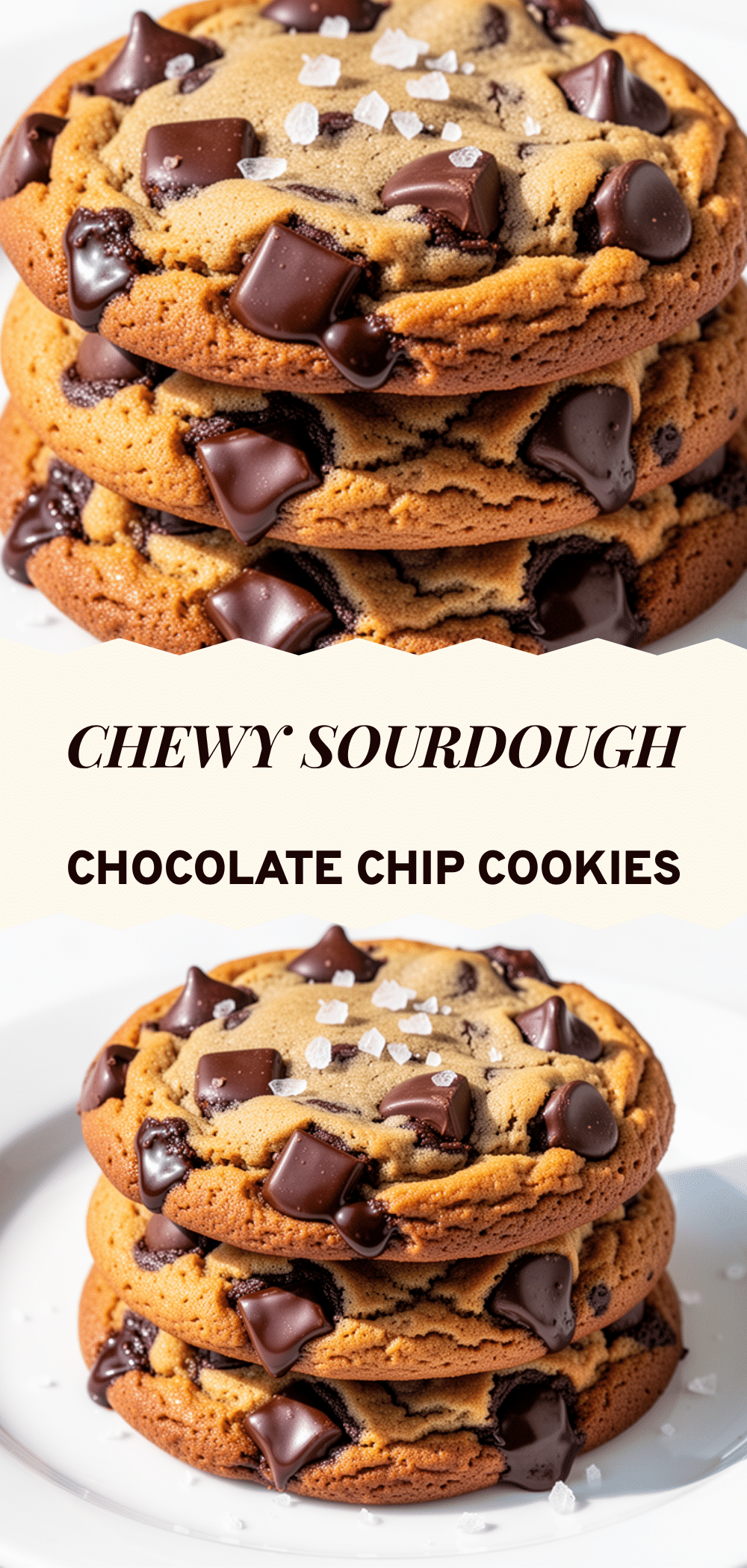
Sourdough Discard Chocolate Chip Cookies
- Total Time: 30 minutes
- Yield: 24 cookies 1x
Description
Chewy, gooey chocolate chip cookies made with sourdough discard. These cookies offer a complex flavor with a subtle tang and a tender, cake-like interior that stays soft for days.
Ingredients
- 1 cup (240g) sourdough discard
- 1/2 cup (115g) unsalted butter, softened
- 1/2 cup (100g) granulated sugar
- 1/2 cup (110g) packed brown sugar
- 1 large egg, room temperature
- 1 teaspoon vanilla extract
- 1 1/2 cups (190g) all-purpose flour
- 1/2 teaspoon baking soda
- 1/2 teaspoon salt
- 1 cup (170g) semi-sweet chocolate chips
Instructions
- Preheat oven to 350°F (175°C) and line baking sheets with parchment paper.
- In a large bowl, cream together the softened butter, granulated sugar, and brown sugar until light and fluffy (about 2 minutes).
- Add the egg and vanilla extract, mixing until combined. Pour in the sourdough discard and mix until the dough is smooth.
- In a separate bowl, whisk together the flour, baking soda, and salt.
- Slowly add the dry ingredients to the wet mixture and mix on low speed until just combined. Do not overmix.
- Fold in the chocolate chips with a rubber spatula.
- Scoop tablespoon-sized balls of dough onto prepared baking sheets, spacing them 2 inches apart.
- Bake for 12-14 minutes, or until edges are golden brown but centers still look slightly soft.
- Let cookies cool on the baking sheet for 5 minutes before transferring to a cooling rack.
Notes
Ensure butter is softened, not melted, to maintain chewiness. Do not overbake; cookies continue to cook on the hot pan. For thicker cookies, chill the dough for 30-60 minutes before baking. Dough balls can be frozen for up to 3 months.
- Prep Time: 5 minutes
- Cook Time: 12-14 minutes
- Category: Dessert
- Cuisine: American
Nutrition
- Serving Size: 1 cookie
- Calories: 180
- Sugar: 16
- Sodium: 120
- Fat: 9
- Saturated Fat: 5
- Carbohydrates: 24
- Fiber: 1
- Protein: 2
Keywords: sourdough discard, chocolate chip cookies, chewy cookies, zero waste baking, easy dessert, sourdough recipes


